Swept by a Glacier, Hiking the Pompelly Trail – by John Williams
December 23, 2025
Posted in
John Williams is a past Chair of the AMC New Hampshire Chapter Excursion Committee and leader of many AMC hikes.
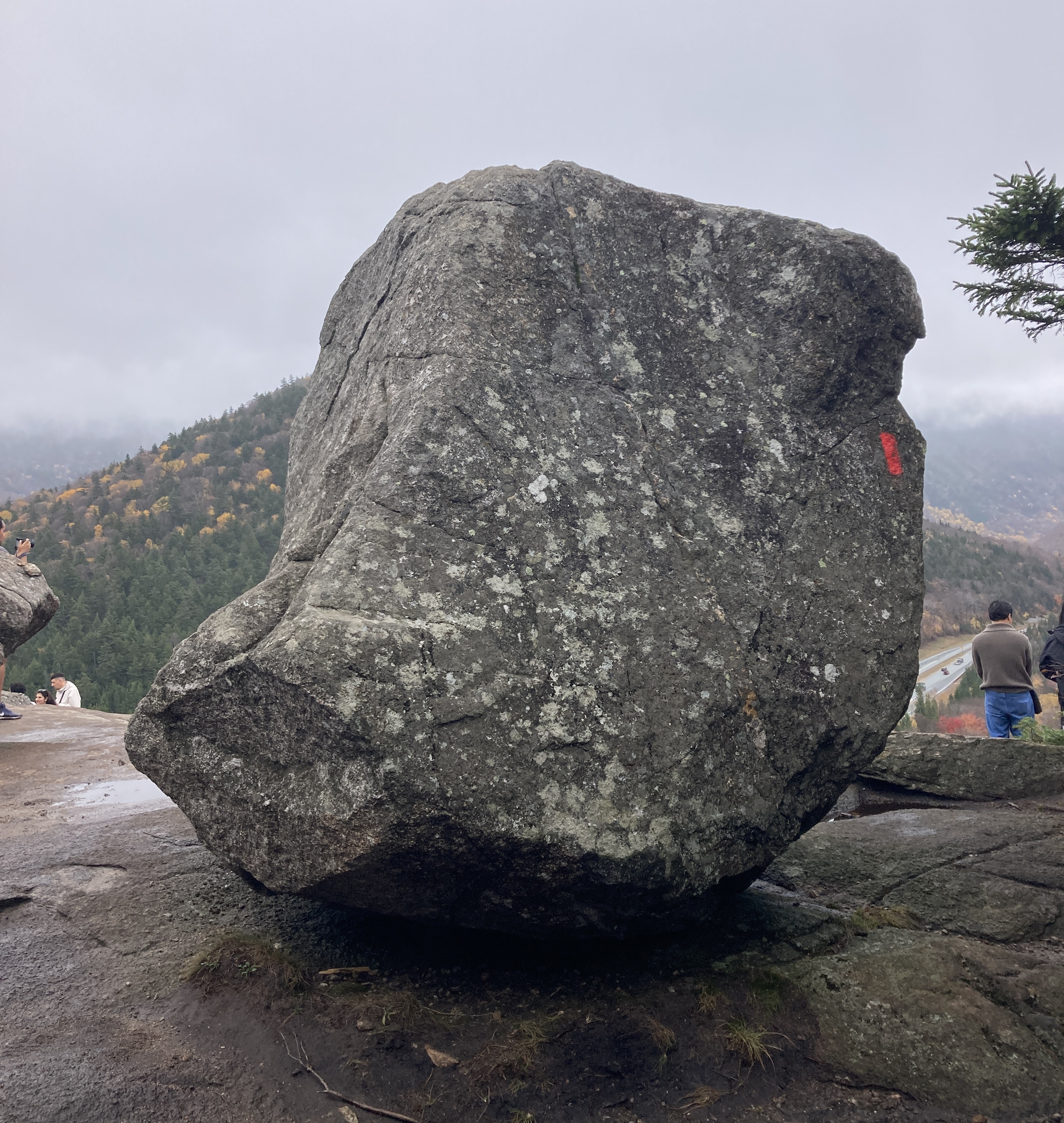
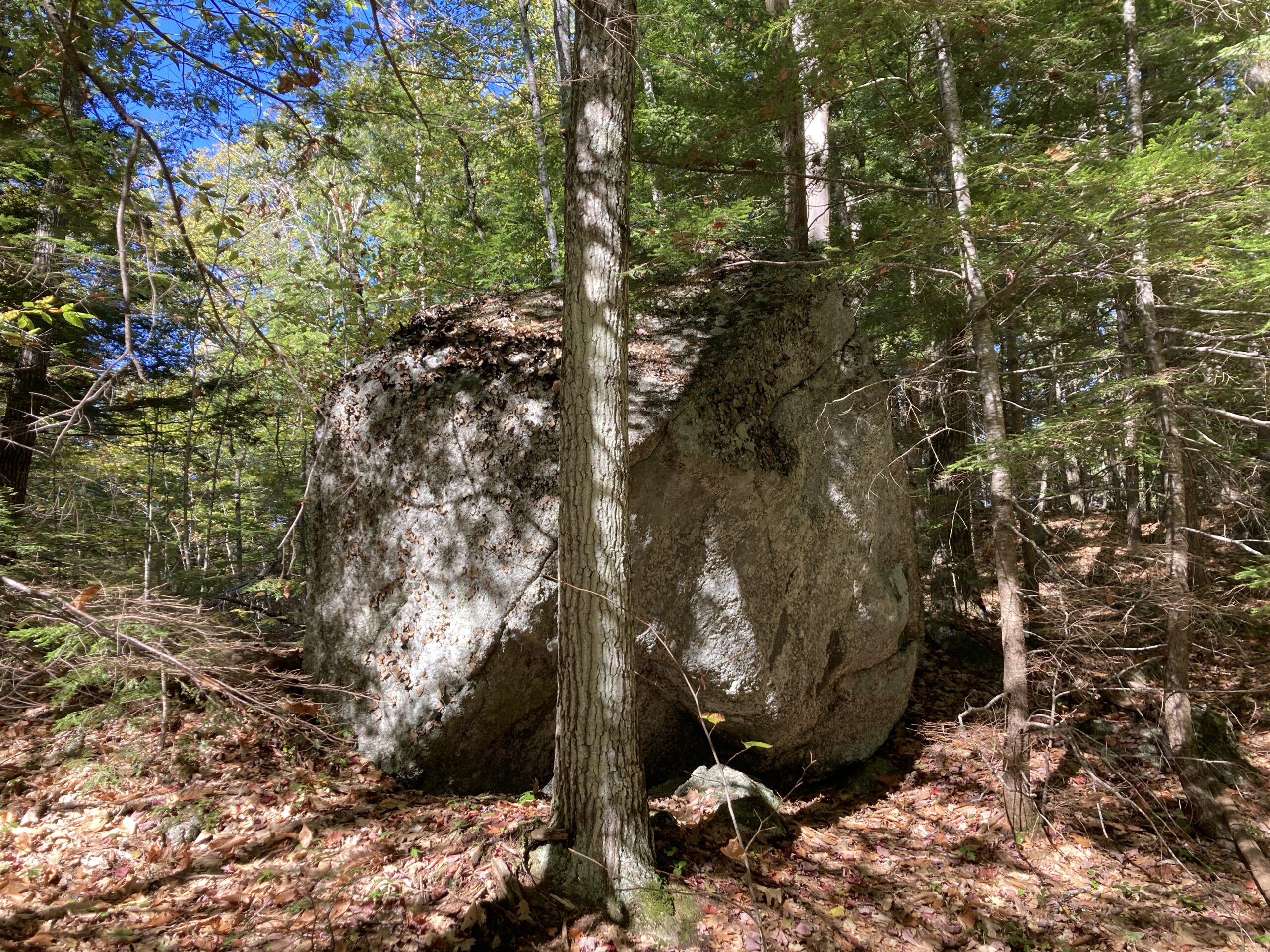
While hiking southward on the rising ridge of Mount Monadnock, I passed a perennial pool which was dry from lack of rain. A sideways glance indicated exposed rounded rocks known as “glacial erratics”, normally under the boggy water. Is it normal for rounded glacial erratics to appear on the glacier approach side of a mountain? We learn from geologists that past glaciers often tear the sides of mountains and carve the valleys during glacial flow. The mountain side tearing occurs on the left, right, or down side of mountains creating u-shaped valleys and cliffs such as the Cannon Mountain cliff created as the ice field flowed southward down Franconia Notch. The mountain side rock torn free can be dragged by the glacier for miles. This slow drag and rolling of stones, creates glacial erratic boulders.
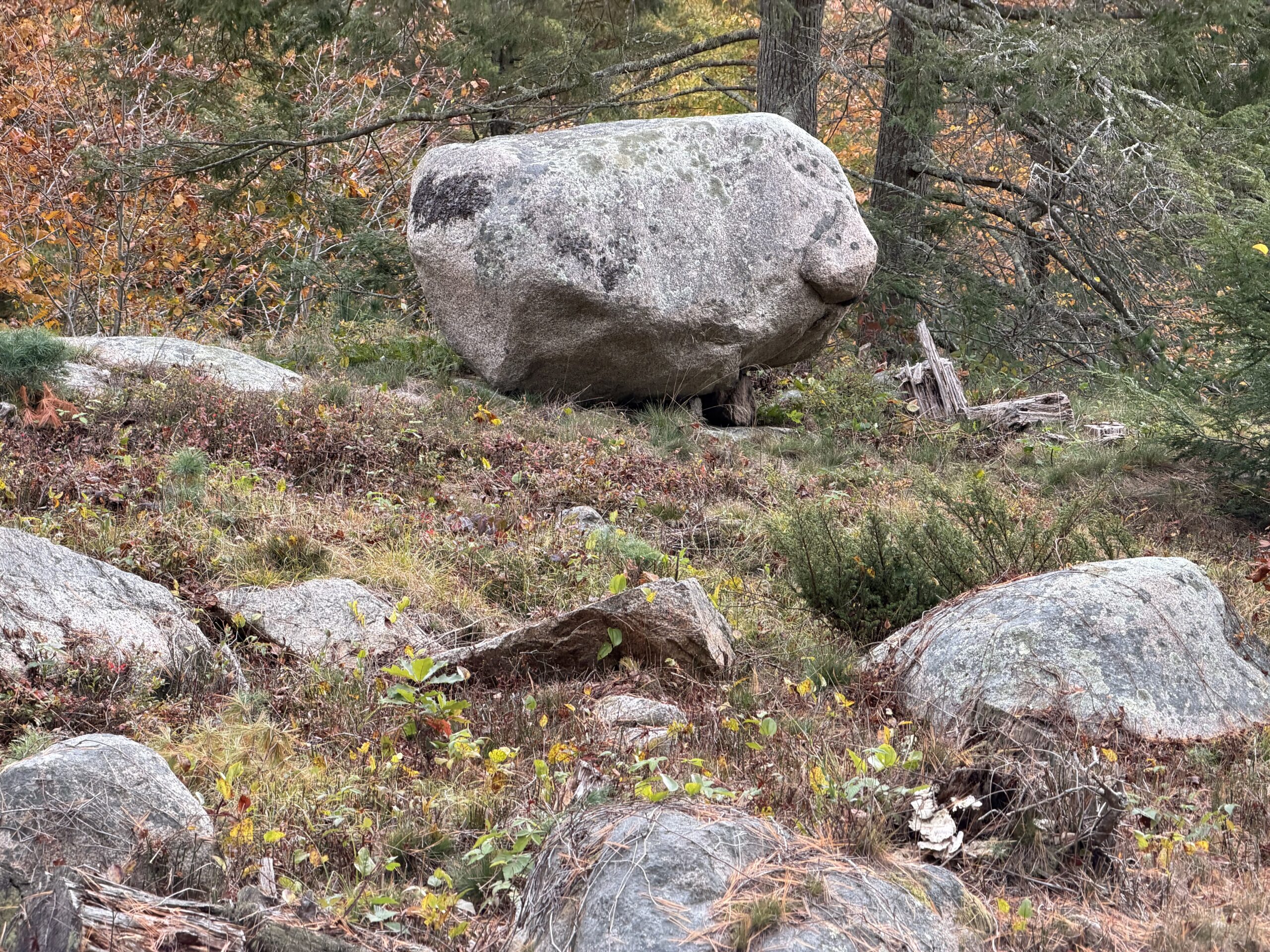
Glacial erratics are boulders left behind by moving and melting glaciers. Erratics can be enormous and are typically rounded and smoothed by years of being dragged or swept by the glacier over the ground below. These curious boulders appear all over the northeast, and are identified as typically sitting on the surface of the ground, and at times somewhat dug in. These are different than sharp fractured rocks which appear at the base of cliffs, steep slopes and rock slides. Look for glacial erratics as you enjoy your hikes.
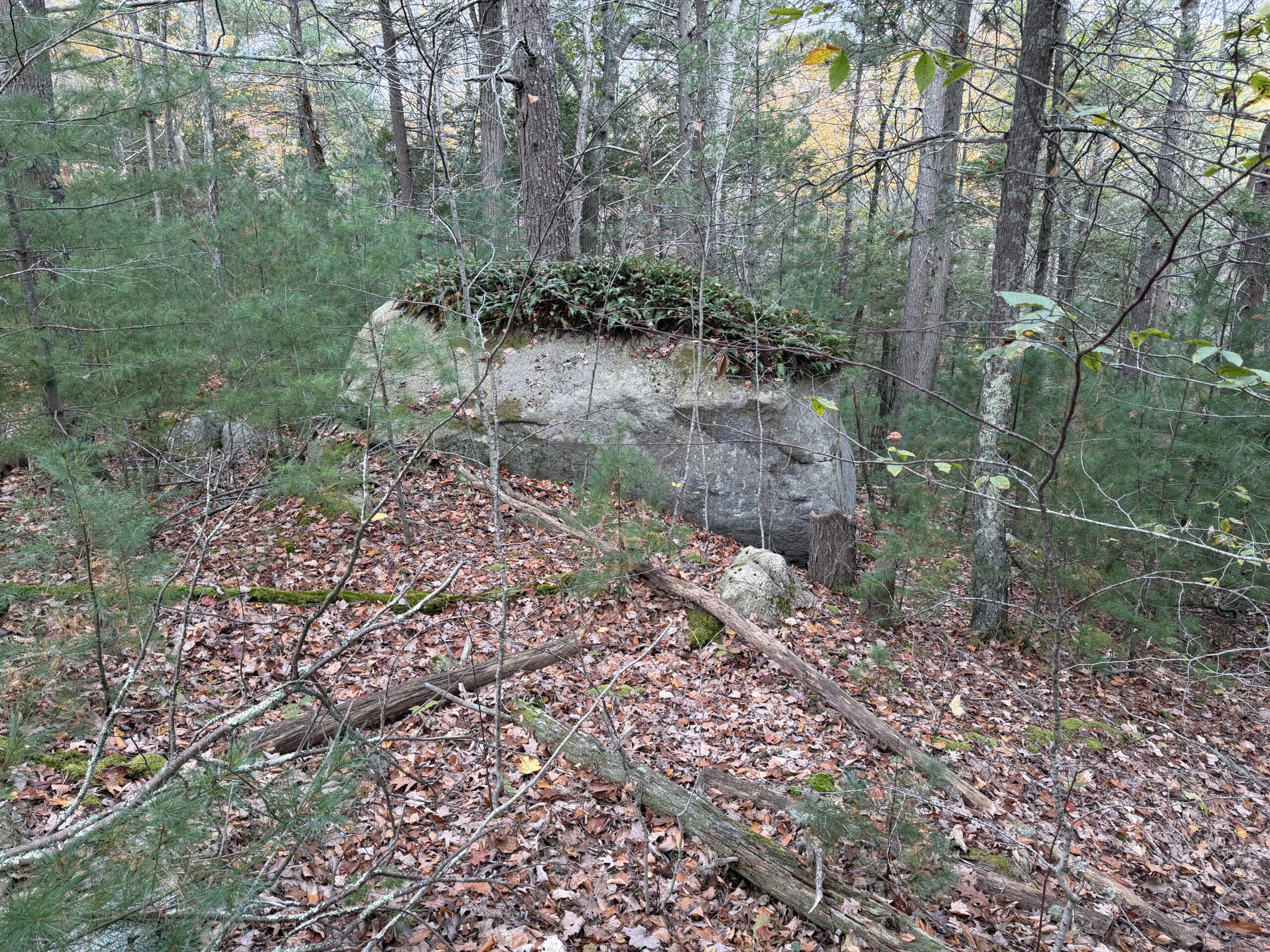
Some have hair…
… And some are bald
As I hike farther south and upward on the Pompelly Ridge toward the summit of Monadnock, the forest dwindles and the exposed ledge opens; evidence of glaciers which scarred the top surface of granite appear to the inquisitive eye. The summit of Mount Monadnock has been affected by thousands of feet of glacier slowly passing by and “sweeping” the surface of the mountain as the mega-tons push southward ever so slowly over thousands of years. The glaciers of the last ice age impacted all of the mountains in the northeast, and in fact glaciers pushed as far south in the region as Pennsylvania. During the most recent ice age, the Lawrentian ice sheet formed the landscape we know today as the northeast. Geologists have documented evidence of glacial scarring (glacial striations) on the high peaks of the Presidential Range. These scarring lines are evidence that the depth of glaciers across the White Mountains was up to 5,000 feet deep, completely covering the mountains we know today, stunning to consider.
As for Mount Monadnock, the large stand-alone mountain in southern New Hampshire, the summit was indeed “swept by glaciers”. As I looked for evidence of scarring lines (glacial striations), visual review is confounded by 13,000 years of weathering, causing splitting of surface rock due to thousands of winter freeze and thaw cycles. Monadnock is also one of our local mountains which was severely impacted by human damage. I am not referring to the names chiseled into the summit granite. A controlled fire in the early 1800s ran out of control, and burned so hot and long that the soil burned and washed off of the entire summit region exposing much more granite than was visible prior to 1800. Another favorite destination with hikers which had this fate is Mt. Cardigan and the Fire Screw peak where extreme fire burned the summit clean.
Where have you seen scarring striations left by glaciers? Look for parallel lines gouged in slab surfaces near summits which all run in the same parallel direction. Hint: check another favorite with hikers near New London, NH.
It is sad to consider the shrinking of glaciers around the world happening at a faster pace than pre-industrial days. Our precious earth is four billion years old, and has been through hundreds of dramatic cyclic changes. Locally, remnants of the last ice age melted out a short while ago on a geologic time scale, around 12,000-14,000 years ago.