From Paper Maps to AI: How Hiking Data Changed in 26 Years on the NH 48 – By Nick Dube
May 4, 2026
Posted in
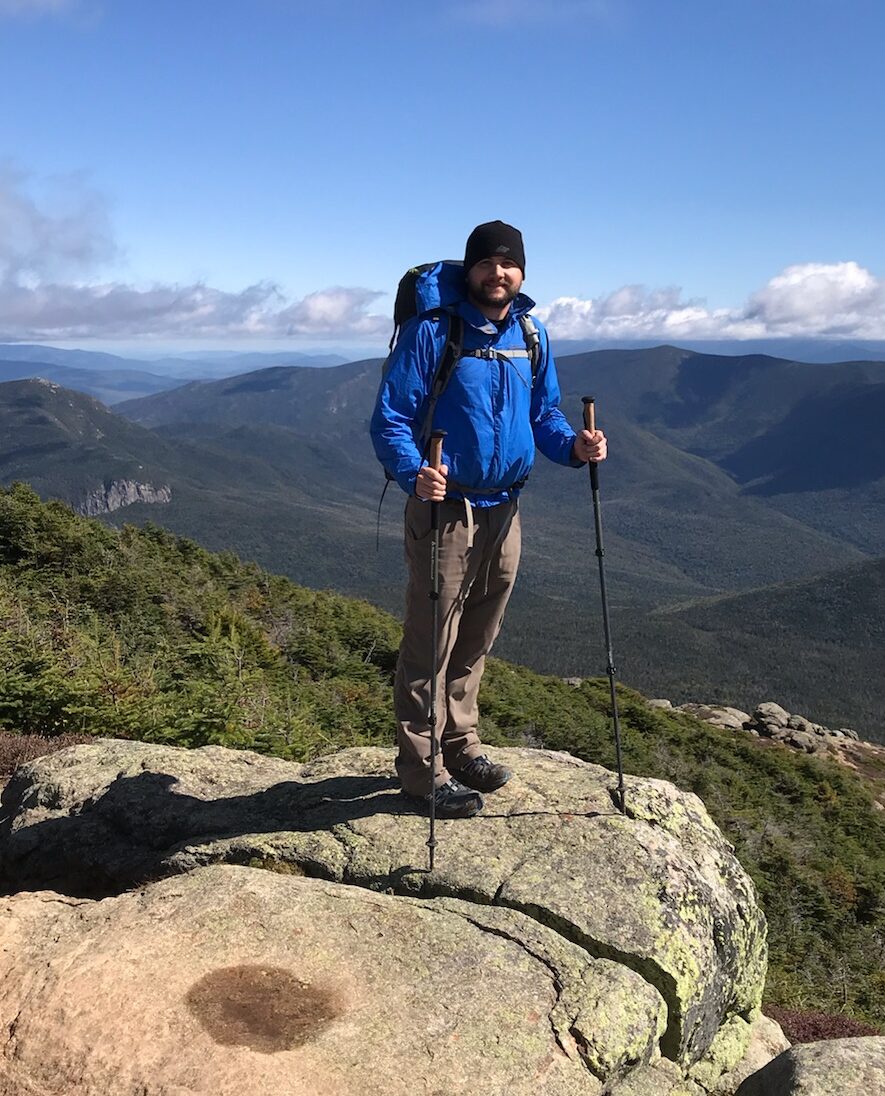
Nick Dube is an AMC NH Chapter member who completed the NH 48 4,000-footers in September 2021, 26 years after his first 4,000-foot summit on Mount Liberty in 1995. He has hiked 800 miles of the Appalachian Trail with his Border Collie, Gus. Nick is the founder of HikerNerd.com, an AI-powered trail conditions and peak tracking platform for New Hampshire hikers, which has been featured in the Boston Globe, the Union Leader, and WMUR.
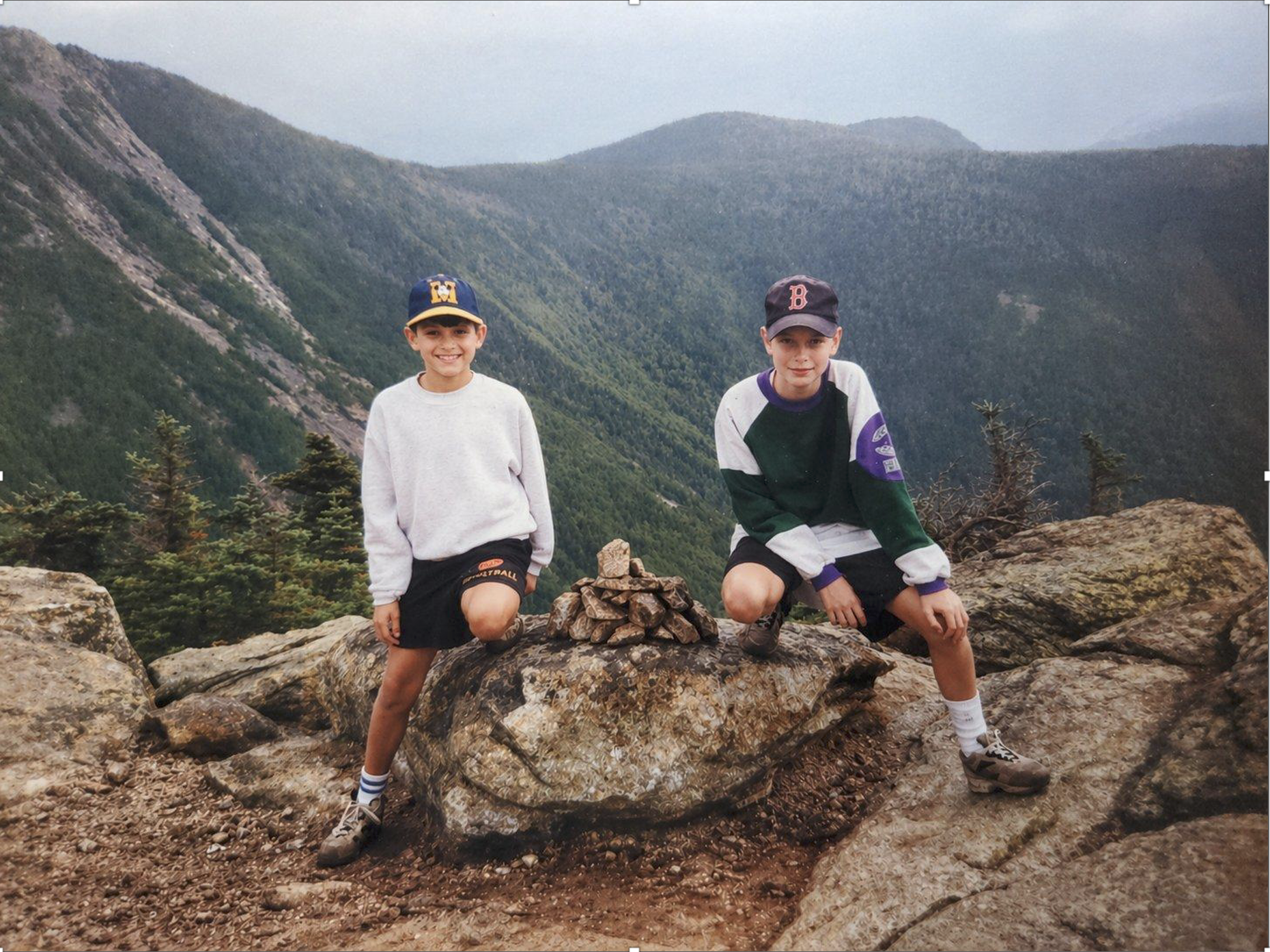
My first 4,000-footer was Mount Liberty. July 22, 1995. It was also my first overnight hike. We stayed at Liberty Springs Tentsite, and the trip was planned by me with help from my Uncle Rudy and Aunt Jean, both avid hikers. I was 12 years old. The group was my parents, my little brother Anthony, my cousin Stacie (Rudy’s daughter), and my cousins Bryan and Tim. We planned that hike the way you planned hikes in 1995: with the AMC White Mountain Guide spread out on the kitchen table, paper maps, and the experience of two people who knew the Whites well. It was a perfectly clear day. The view from Liberty’s summit, with Flume to the south and the spine of Franconia Ridge to the north, is the reason I love the Whites today.
Nick and his cousin Bryan on the summit of Mount Liberty, July 22, 1995. The hike that started it all.
I still have that AMC White Mountain Guide, the same copy I used in 1995. I still bring paper maps on every hike. There’s something about laying a topo out on a table the night before a trip that no app has ever replicated, and I doubt one ever will.
That hike planted something in me that took eleven years to grow.
My parents weren’t really hikers. After Liberty, I didn’t get back on a 4,000-footer until I moved back to New Hampshire in 2006 to work in IT for a local credit union in Manchester. I’d spent the better part of my young adult life away from the mountains that introduced me to the outdoors as a kid. I started hiking solo, picking off peaks one weekend at a time. In 2009, my brother Anthony started joining me, and from there we went to town. Every spring, summer, and fall weekend from 2009 to 2012, you could find us in the Whites.
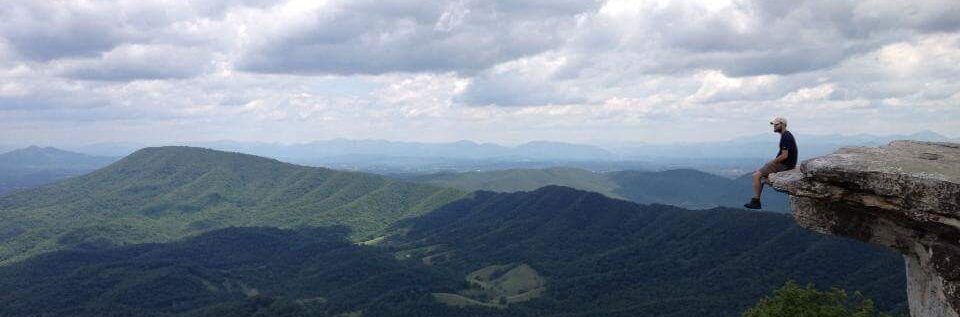
Then life happened. I moved away from New Hampshire in 2012. In 2013, I hiked 800 miles of the Appalachian Trail with my Border Collie, Gus. We lived in Colorado from 2014 to 2016, where I traded the Whites for the Rockies. When I finally moved back to New Hampshire, I had unfinished business: a handful of outliers I’d been putting off for years. Cabot and Waumbek up north, the Wildcat range, and Isolation, which I deliberately saved for last because of its name and because it deserved to be the closing peak after everything that came before.
On September 4, 2021, I finished. I made it a traverse with friends, going up Glen Boulder Trail to Isolation, then camping overnight on the Dry River Trail and walking out to Route 302 the next morning. Standing on Isolation that afternoon, 26 years after Mount Liberty, I felt the weight of every wasted weekend, every turnaround, every 5am drive that didn’t end on a summit. I also felt something I didn’t expect: a clear sense of what I wanted to build next.
26 years from Liberty to Isolation. That’s the real story.
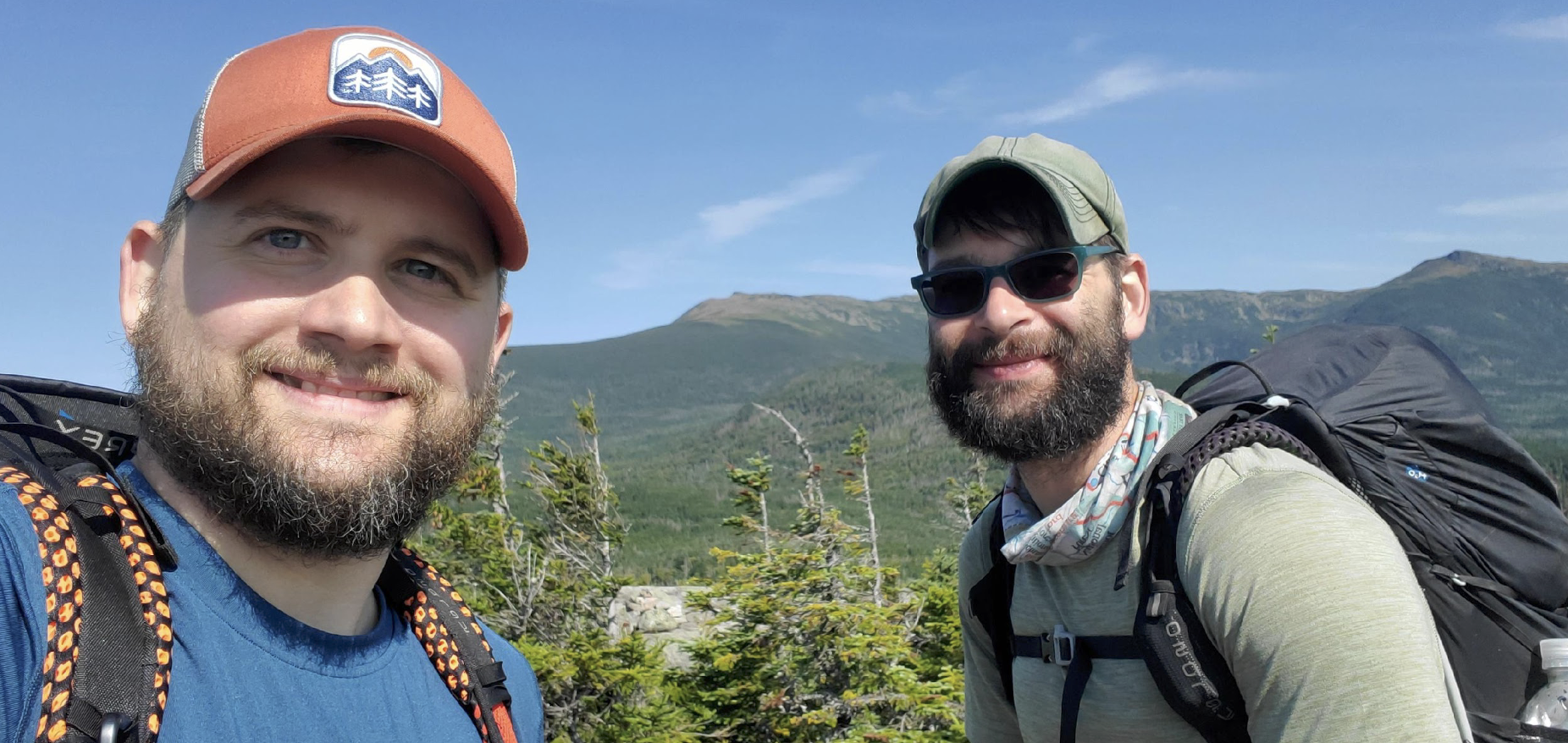
Nick and his brother Anthony on Mount Isolation, September 4, 2021. Peak #48. 26 years after Mount Liberty.
What Hike Planning Looked Like in 1995 vs. 2021
When I started, you planned a White Mountains hike with paper maps and a phone call. The AMC White Mountain Guide was the bible. Trail conditions came from word of mouth or, if you were lucky, the bulletin board at Pinkham Notch. There was no Higher Summits Forecast available to the public. There was no AllTrails. There was no internet, period.
By the time I was hiking seriously again in 2006, the internet existed but the data was scattered. I’d check Weather.com for the nearest town, dial up Mount Washington Observatory’s homepage, look at Mountain-Forecast.com if I remembered it existed, and then check trip reports on Views From the Top or various AMC forums. Every hike took 30 to 45 minutes of research. And I was the planner for the group, so the responsibility for whether we’d be safe out there was on me.
One result of this information void was wasted weekends. Every long-term peakbagger has a list of them. The drive to a Pemi trailhead at 4am, only to turn back at treeline because the wind was 30 mph more than the valley forecast suggested. The river crossing that was rock-hop in summer but waist-deep after spring snowmelt. The Wildcat range traverse where freezing fog turned the open ledges into a navigation problem. The Bonds attempt scrubbed because nobody checked Mount Washington’s wind forecast before driving two hours.
These weren’t dangerous outings. We made the right calls. But they were wasted weekends. Two-hour drives, 5am alarms, gas, and lost time. After enough of them, you start asking why nobody has built a tool that just tells you whether your peak is going to be doable on the day you want to hike it.
But far worse than wasted weekends were the occasional tragic disasters where better information might have led to better decisions. For years I’d watched rescue helicopters working Franconia Ridge and the Presidentials. I’d passed hikers in cotton above treeline with weather building to the west. I’d read hundreds of NH Fish and Game incident reports. I’d read Ty Gagne’s books, Where You’ll Find Me about Kate Matrosova’s last climb on the Presidential Range, and The Last Traverse about the Franconia Ridge tragedy involving Fred Fredrickson and James Osborne. I’ve reread them multiple times.
What struck me about Gagne’s analysis wasn’t that the hikers in those incidents were reckless or unprepared. Kate Matrosova had better gear than most people who hike the Presidentials in any season. The failures were in decision-making: sunk cost bias after investing hours of driving and climbing, summit obsession that overrides the signals telling you to turn back, and the gap between having data available and actually processing it when conditions are deteriorating around you.
The pattern I kept seeing in the rescue reports was the same: someone made a decision that might have gone differently with more data, better analysis, or both. In earlier years, the data simply wasn’t reliable or dense enough to change plans with confidence. But today, weather models are more precise at elevation, trail condition reports are more current, and surface data is more granular than ever. The information needed to make a sound go/no-go decision before leaving the house largely exists now. The challenge is that it’s spread across a dozen sources, and synthesizing it into a single assessment while correctly weighing the risks takes time and experience that most hikers don’t have on a Friday night before a Saturday hike.
By 2021, the data sources had multiplied. NWS Higher Summits Forecast, NOAA point forecasts, Mountain-Forecast.com, USGS stream gauges for the river crossings, recent trip reports from NETC, snow depth data, avalanche advisories from MWAC. More information than ever, but still scattered across a dozen places. Still 30-45 minutes per hike.
The difference between 1995 and 2021 is striking. The data didn’t just get more abundant. It got dramatically better. Weather models are more predictive than they were even five years ago, especially at elevation. Crowdsourced trail conditions from sites like AllTrails, Gaia, and the AMC’s own trail condition reports (only available in the last couple of years) have filled gaps that used to require a phone call to a hut crew or a lucky encounter at the trailhead. Snow depth data, avalanche advisories from MWAC, USGS stream gauges. The quality and density of information available to hikers today would have been unimaginable when I started.
But that abundance creates its own problem. Knowing where to access the data, pulling it together into a single assessment, and correctly interpreting the risk across all of those sources takes time and experience. More data means better decisions are possible. It doesn’t mean they’re easy.
This is where AI and predictive technology can make a real difference. A tool that pulls together high-quality data from multiple sources, synthesizes it into a clear risk assessment, and presents it in a way that’s easy to act on could fundamentally change how hikers make decisions about heading into the backcountry. Not by replacing judgment, but by making the right information available at the right time. Many mapping apps such as AllTrails and Gaia are already starting to incorporate contextual information onto their platforms.
For me, my experience completing the NH 48 led me to build HikerNerd. HikerNerd provides and analyzes information about current and forecasted conditions for 112 peaks in the northeast. It pulls from NWS, NOAA, the Mt. Washington Observatory, USGS, recent trip reports, and more. An AI engine synthesizes them into a single severity rating per peak: green for good, yellow for moderate, orange for difficult, red for dangerous. The ratings are intentionally conservative because the consequences of getting it wrong above treeline aren’t worth the risk of being clever.
You can also drill into any peak to see the full breakdown: why it’s rated that color, the specific hazards, gear recommendations for current conditions, and the best hiking window for that peak in the coming days. Conditions update three times daily. The platform tracks your progress across the NH 48, Winter NH 48, the Grid, and 52 With a View, with more lists coming soon.
If HikerNerd helps even one hiker make the call to turn back on a day when the data says, “not today,” then every hour I’ve put into building it is worth it.
I built the thing I wished I’d had since 2006. Probably since 1995.
HikerNerd is available to AMC members for a discounted price at hikernerd.com/amc.
See you on the trail.