PEOPLE of the WHITES – by Frances Woodard Richardson
March 5, 2026
Posted in
Over the past several years Frances Woodard Richardson has profiled many New Hampshirites who have contributed to the development of outdoor life in New Hampshire. Mountain Passages has published these profiles in a Series called ‘PEOPLE OF THE WHITES.’ Her other portrayals include Samuel A. bemis (1793-1881), Florence Morey (1886-1978), Bradley Washburn (1910-2007), Lizzie Bourne (1833-1855), Franklin Leavitt (1824-1898), Guy Leslie Shorey (1881-1961), Rodney Dallas Woodard (1905-1976) and Stuart Kimball Harris (1906-1969). Frances’ bios of Louis Fayerweather Cutter (1864-1945), Laban Merril Watson (1850-1936) and Leroy Reynolds Woodard (1903-1985) can be found in the Mountain Passages Archives.
Samuel A. Bemis (1793 -1881)
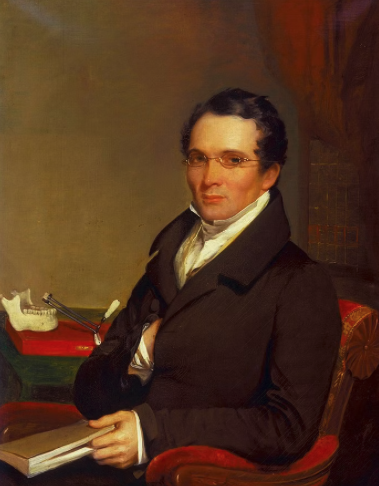
Dr. Samuel A. Bemis was one of the first photographers in the United States to take pictures of the White Mountains of New Hampshire and Boston, Massachusetts. He was also a dentist and an estate builder in Crawford Notch.
Samuel was the illegitimate son of Samuel Bemis (1754-1816) and Hazadiah McWain (1769-1854), born on June 27,1793 in Putney, Vermont. In his youth, he was an apprentice to his father in the watch and clock-making business in Keene, NH, until 1809, when he moved to Putney, Vermont, and opened a shop, later moving to Boston, Mass.
In 1810, he made a tooth extracting tool for Zabdiel Adams, and in 1822, Samuel opened a dental practice and became well known as a dental surgeon, earning a large amount of money. He later moved his business to Baltimore, Maryland.
In April 1840, Samuel attended a lecture by Francois Fanvel-Gourand on daguerreotype photography. Bemis became interested, and for $75.00, he bought a Giroux camera and 12 plates. and began taking daguerreotype pictures in Boston, and the White Mountains, where he vacationed at the Mount Crawford Tavern owned by Abel Crawford and his son-in-law, Nathaniel T.P. Davis. Bemis took a mortgage on the Tavern, and when they died, Samuel took ownership of the Tavern.
The property was about 6,000 acres in Crawford Notch and Bemis, known as “The Lord of the Valley”, began naming a mountain, a brook, and a lake after himself. He named Frankenstein Cliff after Godfrey Frankenstein, a friend and outstanding painter.
Beginning in 1860, Dr. Bemis began building a granite mansion from stone quarried along the Sawyer River. Dr. Samuel Bemis moved in on Christmas Eve, 1880, and became a recluse.
Dr. Bemis allowed the Boston and Ogdensburg Railroad to cross his land for a dollar, and later, a small station was built.
Interested in horticulture, he grafted trees and was awarded for the apples he grew on his farm.
Samuel A. Bemis died on May 22, 1881, and is buried in the Notchland Cemetery beside Abel and Hannah Crawford and others on his estate in Crawford Notch. He left his property to George Morey, his friend, caretaker, and manager of his farm. Morey’s daughter-in-law, Florence Morey, became the owner and operated the mansion as a Bed and Breakfast called The Inn Unique.
In the 1980’s, John and Pat Bernardin remodeled eleven bedrooms and opened the inn for business. In the1990’s, it was sold to Ed Butler and Les Schoof, who continue to run the estate as The Notchland Inn.
REFERENCES:
- Find a Grave, by Kimberly Anderson Bloodgood and Shirley Mitchell
- Samuel Bemis: Renaissance Yankee: Historical New Hampshire by Catherine Campbell
- Wikipedia
- Notchland and Samuel Bemis by Rick Russack
- Bemis at Crawford Notch by Bartlett Historical Society
Florence Morey (1886-1978)
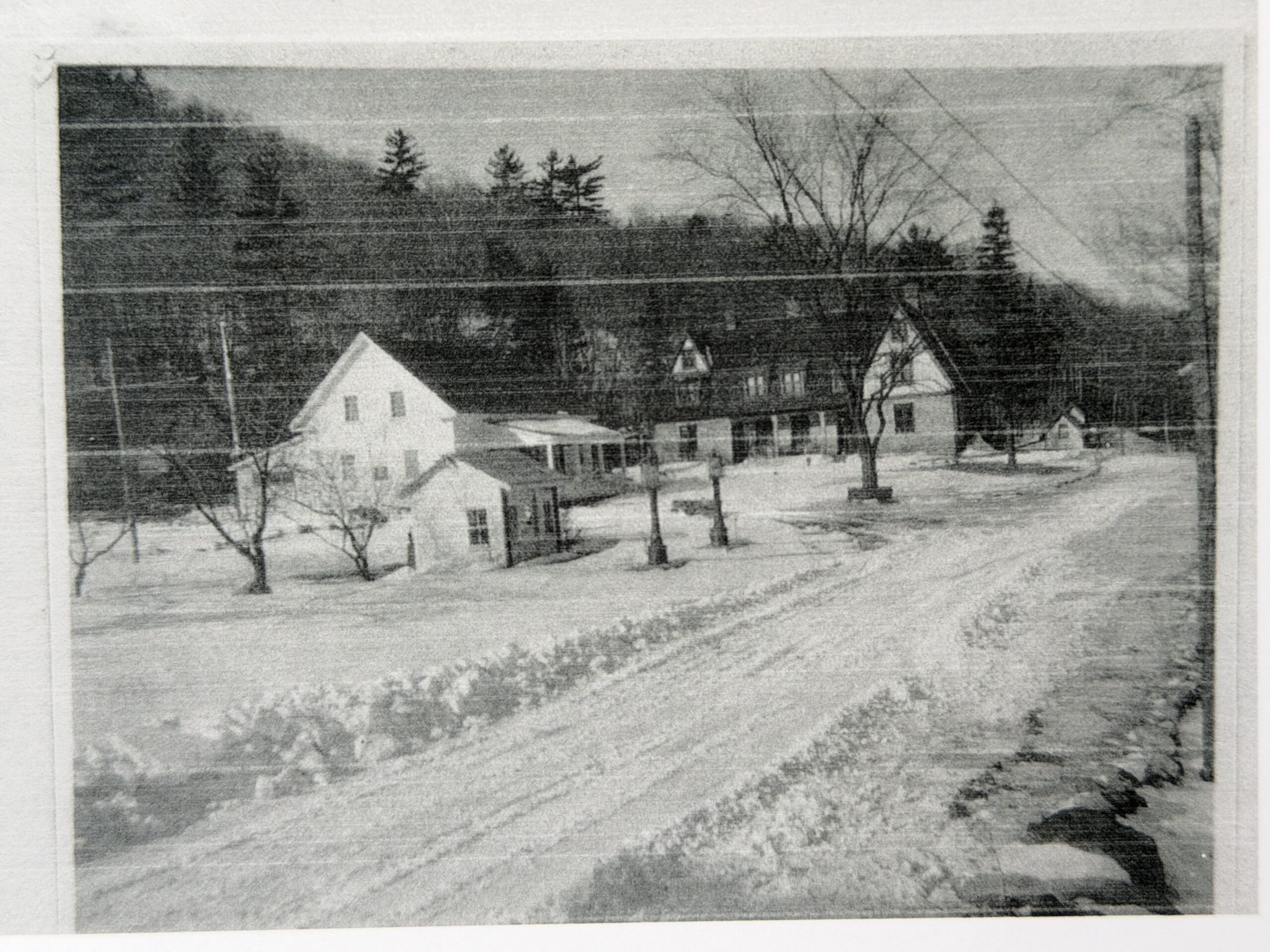
Notchland – The Inn Unique c. 1930
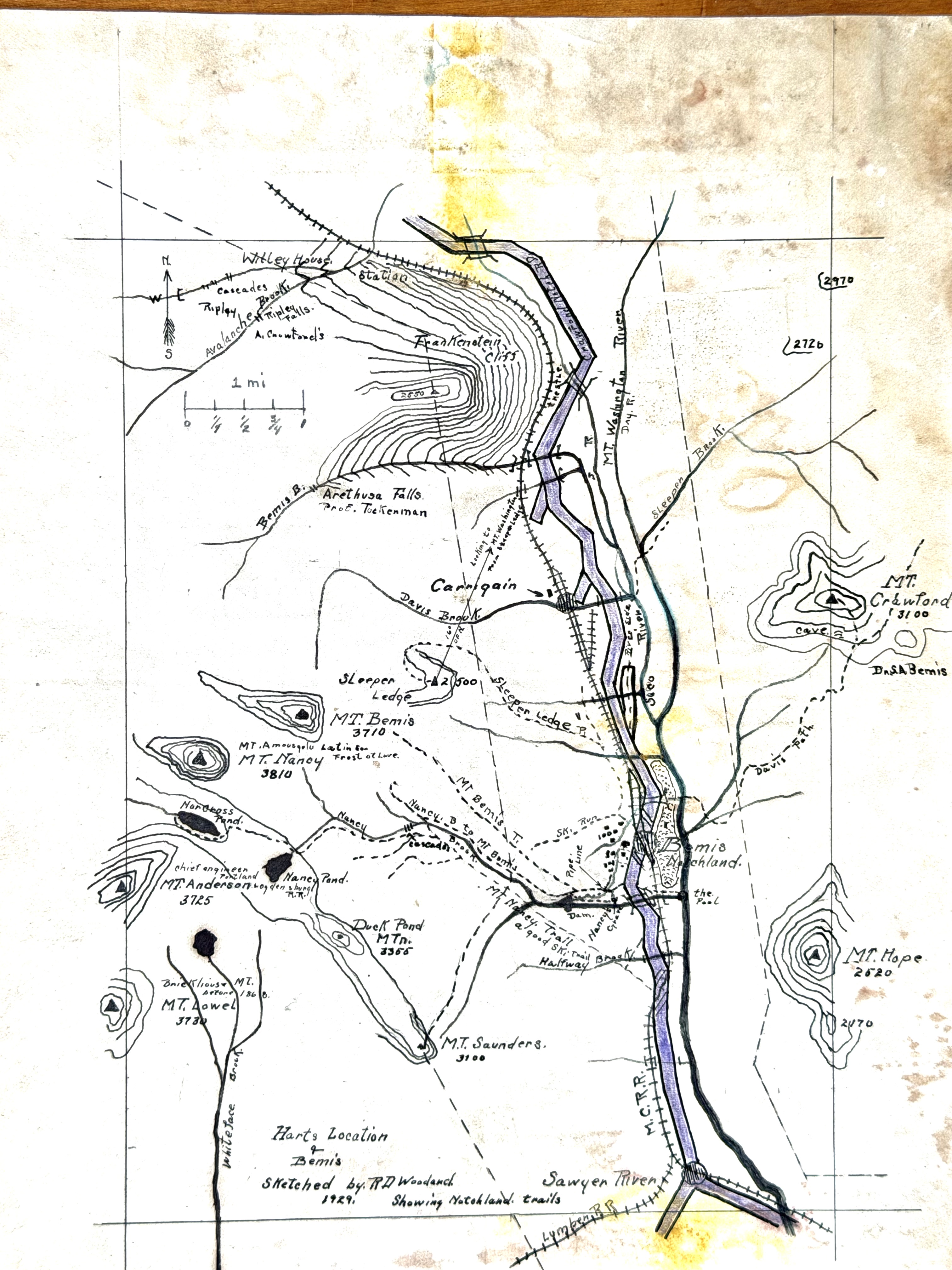
Hart’s Location & Bemis sketched by R. D. Woodard in 1929 showing the Notchland trails
Brad Washburn (1910-2007) – Explorer, Mountaineer, Photographer and AMC Member
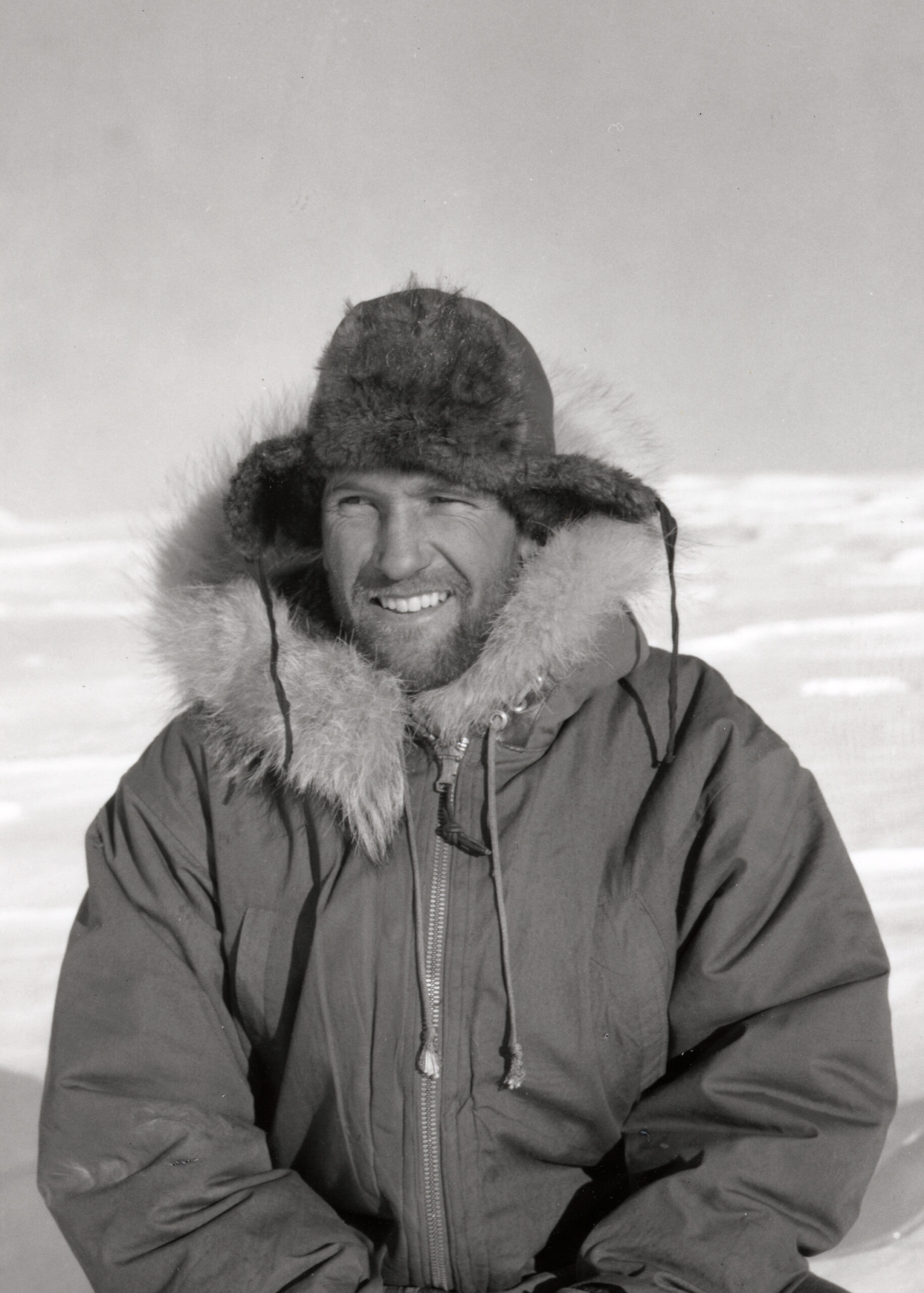
- Old Hutmen Association, Henry Bradford Washburn, Jr.
- The Man Who Mapped N.H. White Mountains, by Rob Burbank
- In Memory of Brad Washburn, by Peter Crane
- About Brad Washburn, by Brad Washburn Gallery
- Brad Washburn, Wikipedia
- Washburn’s Death Marks the Passing of a Legendary Figure, by Barbara Tetreault
- Mark Richey, American Alpine Publications 72200747600/Henry Bradford Washburn
Lizzie Bourne (1833-1855) – First woman to perish on Mt. Washington
- WHEN WOMEN AND MOUNTAINS MEET by Julie Boardman
- FIND A GRAVE created by Hurricane
- MOUNT WASHINGTON: LIZZIE BOURNE Kportconnections

Lizzie Bourne Memorial on Mt. Washington
PEOPLE OF THE WHITES: Franklin Leavitt (1824-1898)
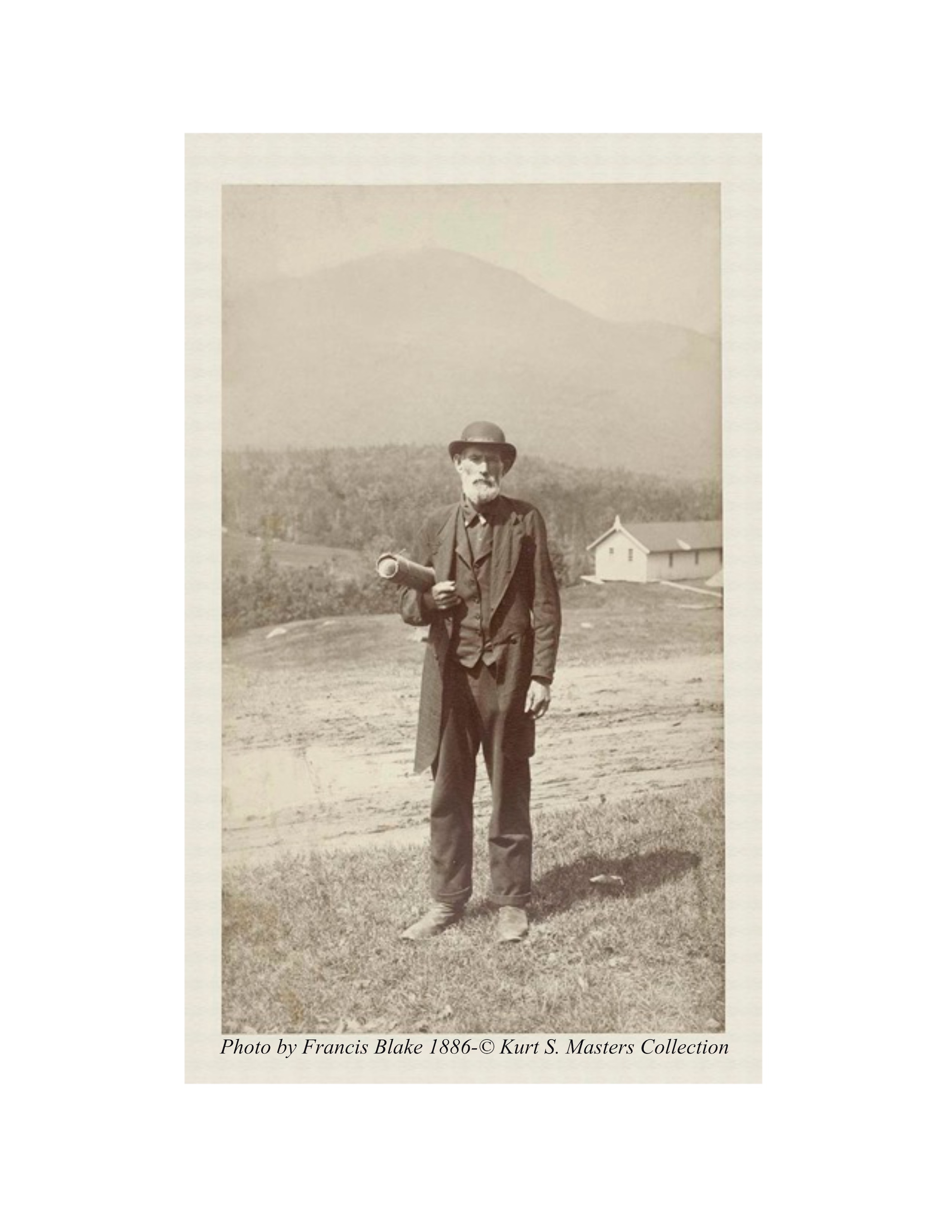 The White Mountains became a destination for artists and tourists in the eighteen hundreds. Franklin Leavitt saw these mountains as an attraction, so he drew a series of maps of the region.
Franklin Leavitt of Lancaster. NH, was born about 1824, the son of John and Nancy (Garland) Leavitt. When he was young, he worked as a farmer, a hunter, a woodsman, and a laborer. From 1836-1848, he worked for Thomas J. Crawford at the Notch House near Crawford Notch. He helped Crawford build a bridle trail and the Carriage Road up Mount Washington.
When the Atlantic and St. Lawrence Railroad (later operated by the Grand Trunk Company) was built to Gorham, N.H. Leavitt, an enterprising man, saw the mountains becoming a popular destination. He began drawing curiosity maps of the White Mountains. In 1852, he took his first map to Boston where a lithograph plate was made and printed on thin paper. His later maps were reproduced by wood engravings.
Franklin’s “pictorial” maps were not drawn to scale and North was at the bottom of the map. Later North was at the top. The maps had geographical features not realistically placed. Franklin embellished the maps with illustrations of local places, people, and events. He depicted Harry Crawford battling a bear, Col, Whipple in the antlers of a moose, himself being lowered on a rope to Devil’s Den on Mount Willard, the Willey Slide, and the death of Lizzie Bourne among other illustrations.
Franklin sold these maps at Grand Hotels and Railroad Stations for a dollar. They made interesting souvenirs as they showed roads with carriages, tracks with trains, hotels, and resorts, but were not useful as a travel guide.
After creating eight pictorial maps, Franklin turned to writing poetry in 1881. His first poem was published about the 1885 landslide on Cherry Mountain, followed by depicting the Willey Slide of 1826. His longest poem was the retelling of a logging train disaster in 1890.
Franklin Leavitt died on August 30, 1898, and is buried in the Summer Street Cemetery in Lancaster, NH.
Franklin Leavitt was a self-made man who had a vision for the White Mountains to be a desired destination. His souvenir pictorial maps contributed to the development of the region.
References:
- Francis Blake’s 1886 portrait of Franklin Leavitt a the top of this post is only known photo of Franklin Leavitt and is provided by the collection of Kurt masters
- Kurt Masters, map collector
- Adam Jared Apt and Rick Russack, FRANKLIN LEAVITT’S MANUSCRIPT MAPS AND POETRY
- David Tatham, PRINTS OF NEW ENGLAND

1871 Leavitt Map from the collection of Kurt S. Masters (copyrighted)
PEOPLE OF THE WHITES: Guy Leslie Shorey (1881 – 1961)
 Guy Leslie Shorey, the son of Charles H. Shorey, ( 1849-1909) a toolmaker for the railroad, and Permelia (1850-1859), was born on December 17, 1881. in Gorham, N.H. Guy’s interest in photography, a new technology, began when he was given an Eastman Kodak camera at the age of twelve. He took snapshots of neighbors, townspeople, family groups, local events, and buildings in Gorham. He used a small building at the rear of the family home on Mechanic Street as a studio to develop and print his images. Later the building was moved to the side of the house for better visibility.
- AMONG THE WHITE HILLS, by Guy A. Gosselin, and Susan B. Hawkins
- GUY SHOREY; AMONGE THE WHITE HILLS, Curated by Peter Crane
- Guy L. Shorey’s photos captured in the North Country, by Gabrielle Griswold
Your content goes here. Edit or remove this text inline or in the module Content settings. You can also style every aspect of this content in the module Design settings and even apply custom CSS to this text in the module Advanced settings.
PEOPLE OF THE WHITES: Stuart Kimball Harris (1906 – 1969)
Stuart Kimball (Slim) Harris was a long-time professor of Biology and Botany at Boston University, an active AMC member and Hutman at the Lake of the Clouds Hut, and the author of many articles and books.
Stuart, the son of Hayden Bosworth Harris and Vina May Harris, was born in Haverhill, MA on January 30, 1906. He married Calista Crane, born April 28, 1902, daughter of Clarance and Stella (Howard) Crane on August 24, 1929, in Natick, MA. Stuart and Calista (Cal) both naturalists, spent time in the White Mountains and eventually became Hutmen working at The Lake of the Clouds Hut.
Their daughter, Sally was born on November 20, 1937. In the summer of 1939, Slim carried Sally in a papoose basket to the Zealand Notch Hut and later to the Lake of the Clouds Hut on his back.
Joe Dodge, manager of the Hut System, asked Stuart, Calista, Sally, and brother, Kimball to be the summer crew at the Zealand Notch Hut in 1949. Sally was the youngest “hut girl” on record at seven years old.
Stuart was a scholar who held several degrees. After High School, he received a Bachelor of Business Administration from Boston University in 1927, a Bachelor of Science in 1930, and a Master of Arts in 1932. In 1936 he earned a Master in Botany from Harvard University. Dr. Harris taught Biology and Botany for thirty-six years on the faculty of the College of Liberal Arts at Boston University. He published many scholarly papers on botanical topics, often published in AMC journals or Rhodora, a publication of the New England Botanical Club.
Since 1930, Stuart was a member of the New England Botanical club. He was the Recording Secretary for the Club from 1935 to 1964, and President in 1964.
In 1949, the Mount Washington Observatory added Stuart Harris to its Board of Directors joining many other eminent scientists advising and overseeing one of the preeminent meteorological institutions in the world.
Both Slim and Cal were botanists, and they worked together to write a seven-part series of articles, PLANTS OF THE PRESIDENTIAL RANGE, published in APPALACHIA from 1940-1946. In 1964, Stuart published AMC FIELD GUIDE to MOUNTAIN FLOWERS of NEW ENGLAND.
Stuart and Calista built a “base camp” north of Berlin, N.H. for their hikes in the mountains. He continued his interest in the AMC and became the Club’s Naturalist leading annual Spring Flower Tours in the Presidential Range.
Stuart traveled extensively collecting plants for study and identification He went to California, Honduras, and Mexico, and in 1944 on a scientific expedition to Alaska and the Yukon over the Alcan Highway where he served as a cook.
The family stayed in California where Sally married Sanford (Sandy) Wilber in August 1961. They worked with endangered birds in National Wildlife Refuges in California and Idaho. They returned to the base camp in Berlin, to live until 2008.
Being a naturalist, Stuart enjoyed studying and identifying birds at his camp and made annual Christmas bird counts for the Audubon Society, He also was a silversmith and a weaver.
Stuart K, Harris died July 30, 1969 (63), Calista died on March 16, 1993 (90) in Oregon and Sally died on December 25, 2022 (85) in Oregon.
References:
- THE STORY OF MOUNT WASHINGTON, by F. Allen Burt
- OLD HUTCROO ASSOCIATION
- WHITE MOUNTAIN SOJOURN, by Alex Macphail
- RHODORA, by Ralph C. Bean
PEOPLE OF THE WHITES: Rodney Dallas Woodward (1905-1976)
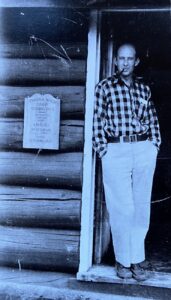
Rodney Dallas Woodard – courtesy of F. Richardson
Rodney (“Rod”) Dallas Woodard, born on April 18, 1905, was the second son of Charles Franklin Woodard (1882-1960) and Eva Viola (Reynolds) Woodard (1880-1974) of Brockton, MA. Charles was a designer and model maker of men’s lasts at the Woodard and Wright Shoe Factory in East Bridgewater, MA. (A last is a mechanical form shaped like a human foot. It is used by shoemakers and cordwainers in the manufacture and repair of shoes.) Rodney would apprentice in the shop where he developed a love for wood.
Rodney entered Brockton High School on September 7, 1921, and studied Mechanical Drawing. He transferred to Wentworth Institute in Boston, MA to study machine work and pattern design graduating in 1925.
In 1926-27, he was hired as an experimental designer for the Darlo Company of Boston, MA to invent a faucet dishwasher and soap dispenser. In 1928 he worked as a draftsman for the design and construction of a Dairy Cooler for the Emerson and Mason Refrigeration Engineers.
In 1924, Rodney, Ned Whitmore, and Bob Jackson made their first trip to the White Mountains (see Rod’s log in MOUNTAIN PASSAGES, Vol.47 Number 4, Winter 2021, pages 8, 9, and 11). Rod returned to the mountains in 1926 as a hutman packing goods to the Lake of the Clouds Hut. Since he couldn’t carry heavy loads, Joe Dodge suggested that he cook at Madison Spring Hut. He worked at that hut from 1928 to 1931, becoming the Hut Master. He still needed to pack some goods, like gasoline and klim ( dried milk), so when he returned to Brockton in the winter, he invented the “Freighter”, a wooden pack board that fit the back. It was first used by the Hutmen in 1931 and was sold to the government for use by the Forest Service. He also copyrighted the process of using plasticine proforma to form relief maps. He poured Plaster of Paris over the clay forms to make negative molds for bronze models. Celluloid was poured over the models to make the pocket-size relief maps of Crawford Notch, Franconia Notch, and the White Mountain Region. Today, copies can still be found in private collections.
To get to the Pinkham Notch Hut. In April or May was a bit of an ordeal in those days. The road was not plowed so he took the train to Portland, ME then on to Gorham, NH. From there he took a sled to the Glen House and snowshoed from there to the Pinkham Notch Hut.
From 1932 to 1936. Rodney became the Assistant Hut Manager to Joe Dodge. His main duty was to make monthly inspections of all the huts. After an unfortunate disagreement with Joe Dodge, Rodney and his wife, Leta (Church) whom he married on September 10, 1936, left and moved to Jackson, NH in January 1937. A year later they bought the guest house on the Bigelow-Merriman Estate (now Stonehurst) in Intervale, NH. There Rodney established his woodworking and machine shop, THE ARTISAN SHOP. He became a renowned designer craftsman creating custom-made items of fine art, his own tools and machinery, cabinet work, ski trophies, and commemoration plaques. (One for “Ted” Fuller acan e seen at the Lake of the Clouds. Ted [Edward Kidder Fuller] was the Hut Master at the Lake of the Clouds in 1943. He was killed in Germany in 1944 while serving in the US 95th Infantry Division. In his memory his family donated his Life Insurance to the Lake of the Clouds Hut.)
Rodney was the Chairman of the Council of the North Conway League of NH Craftsmen for twenty-five years and sold some of his carved items there. A carving of a Barred Owl is in the permanent collection at the Headquarters of the League in Concord, NH.
Rod gave woodworking classes through the CARY (Crafts for Retirement Years) program in Berlin and Wolfeboro, NH, and in his own shop.
He made gavels for the 1944 International Monetary Fund Conference held in Bretton Woods. The wooden gavels were made from cherry trees cut from the grounds of the Mount Washington Hotel and were the official American gift to the leader of each delegation.
In 1947, Raymond Loud of Kearsarge, NH, and Rodney invented and manufactured the TETRATOOL, a machine with a circular saw, a lathe, and a drill press. In 1967 Rodney carved “the World’s largest salad bowl” from a 200-pound birch burl.
Rodney helped design surgical tools for Dr. George Harold Shedd, lead surgeon at the North Conway Memorial Hospital. He was noted for his expertise in operations on legs broken in skiing accidents. Rod also made the Crucifix for the St. Andrews Episcopal Church in New London, NH, the cross for the facade for the Reverence for Life Building at the First Church of Christ Congregational, in North Conway, NH, and a bas-relief plaque of Aesop’s Tortoise and the Hare for the children’s room at the Conway Public Library, Conway, NH.
Rod made picture frames for local artists and special frames for Karl Drerup, a world-famous enamelist of Campton, NH, and for himself, a Sunday painter following a family tradition of his father, Charles, and his artist brother, Leroy (see MOUNTAIN PASSAGES Vol. 49, Number 4 Winter 2023-24 page 13.)
Rodney D. Woodard passed away on October 29, 1976, and is buried in the North Conway Cemetery. Rodney kept lifelong friendships with people he met through the AMC and in April 1976, the AMC recognized his contribution with a life membership. Rodney’s daughters survive him.
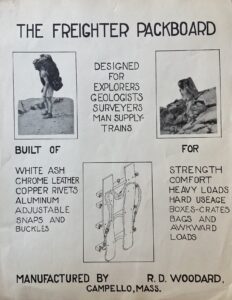
Design of backboard still used today to haul supplies to AMC huts – courtesy of F. Richardson