Skiing The Cog – It may not be “backcountry” but it sure is fun – by Ham Mehlman
January 17, 2026
Posted in
Ham Mehlman is Editor-in-Chief of Mountain Passages and an AMC-NH member. He skis, hikes and bikes New Hampshire’s backcountry, trails and byways when time allows.
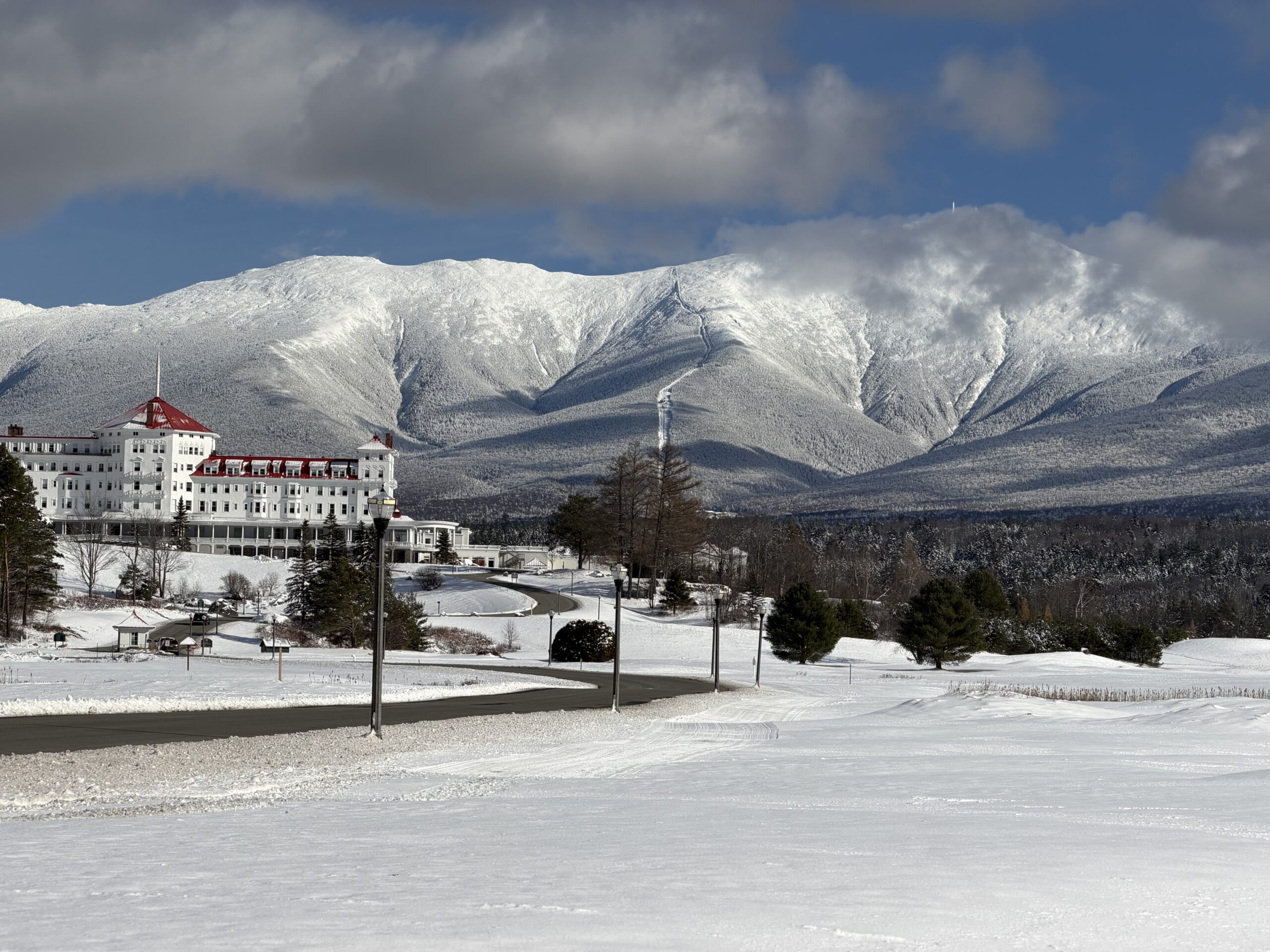
Some think it a “scar”. Others marvel at the 19th century engineering genius that runs its length. But what skiers see driving up to Mt. Washington Hotel in Bretton Woods, NH, is an invitingly wide and open, snow covered boulevard ascending to the top of Mt. Washington along the ridge between the Burt and Ammonoosuc ravines. Unnaturally straight, clearly cut by man, but pleasingly long at a moderate, skiable pitch. For those familiar with skiing on Mt. Washington, a more forgiving run than those terrifying, 50 degree plus freefalls down the ravines on the Pinkham Notch side. Is that line skiable? Can you skin it? Is there a lift? Yes, yes and yes. And then you hear the whistle blow.
The Cog Railway roughly follows a path “first blazed by Ethan Allen Crawford” in 1821 or so. Some may correctly connect Ethan Crawford to the Crawford Path, the “oldest continuously maintained footpath in the United States” tracking from Crawford Notch to the summit of Mt. Washington.
The Cog line offers skiers many more options than the typical backcountry adventure. These options accommodate skiing abilities, weather, descent lines and “luxury” uphill conveyance for those more interested in purchasing turns than earning them. The more adventuresome can burn their thighs down approximately 3,600 vertical feet to the Marshfield Base Station starting from the Mt. Washington summit, a 2.75 mile descent. This is a big run by any standard in the world. By comparison, the descent from the rim of Tuckerman Ravine to Joe Dodge Lodge in Pinkham Notch is approximately 3,200 feet. Of course, the descent from the summit of Washington through the ravine down is king at 4,268 ft, as big as any lift serviced run in the continental US if you count the rare times the Mt Washington Auto Road operates their snowcat to the summit. Summiting on foot for a run to Pinkham Notch is a very big day indeed, but one of the most hallowed in the annals of backcountry/extreme skiing. The Cog doesn’t have the skiing lore of a Tuckerman lap but is only 600 feet shorter and far more amenable to skinning its length, or some segment thereof.
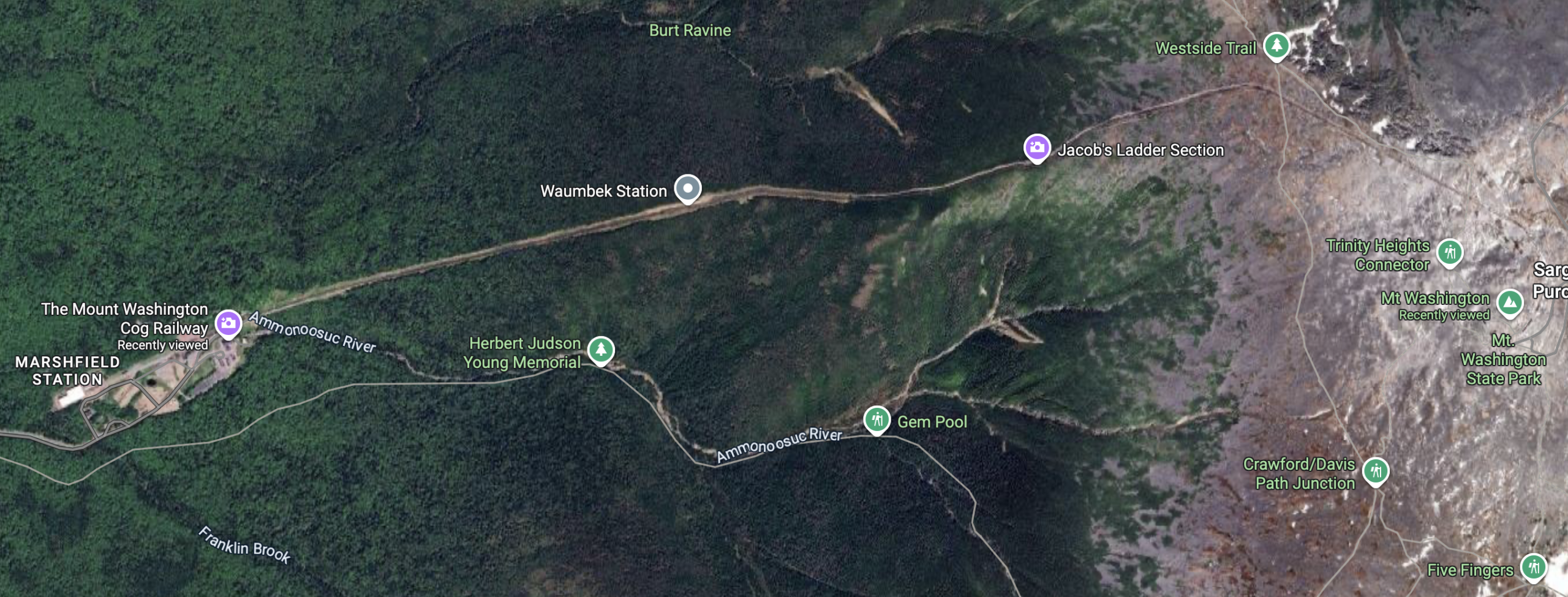
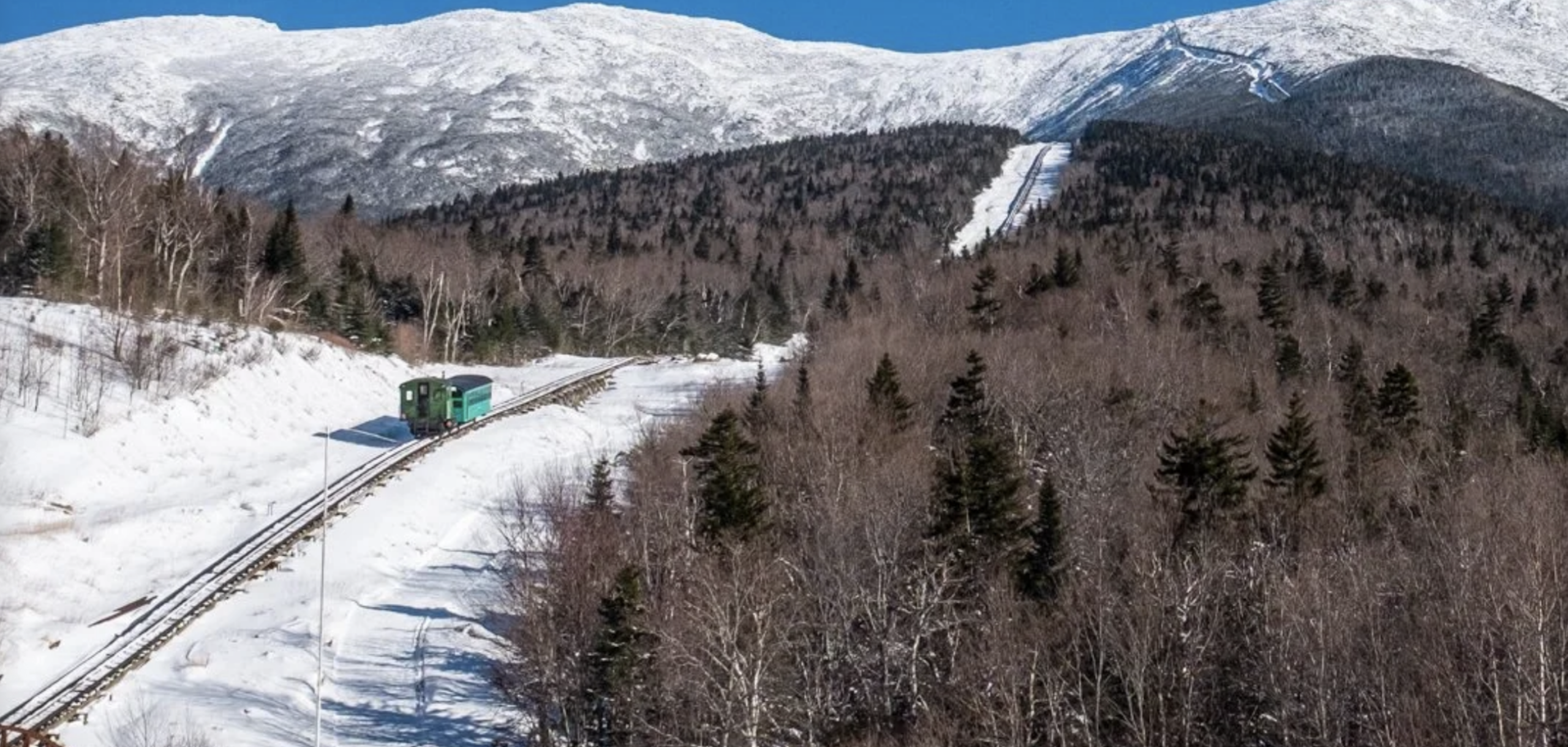
Drone shot lifted from TheCog.com website
The top third is rugged, typically wind scoured alpine terrain. Not often enjoyable except for those who need to check off a summit or trail box.
For the rest of us there are other ways to enjoy it.
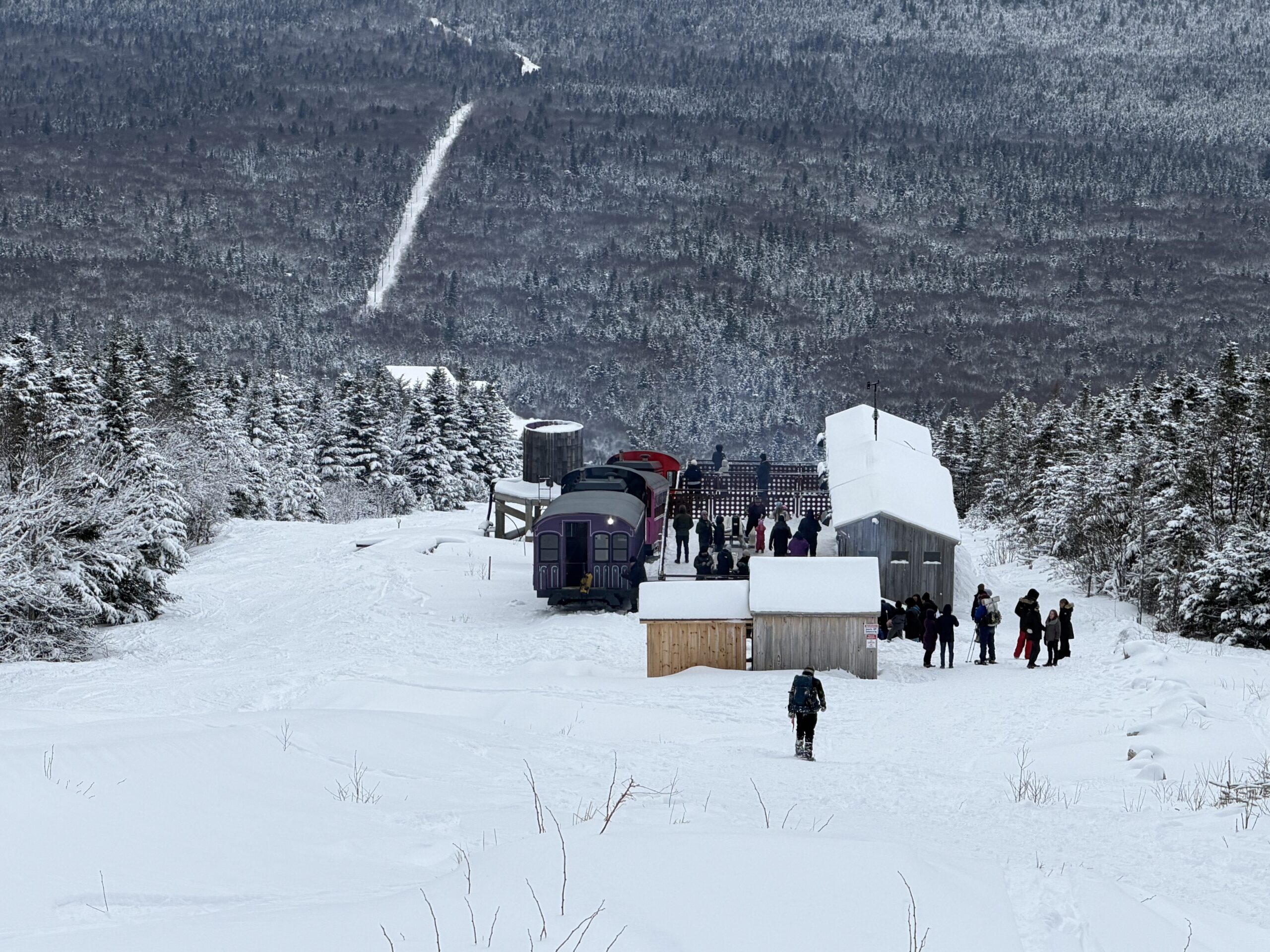
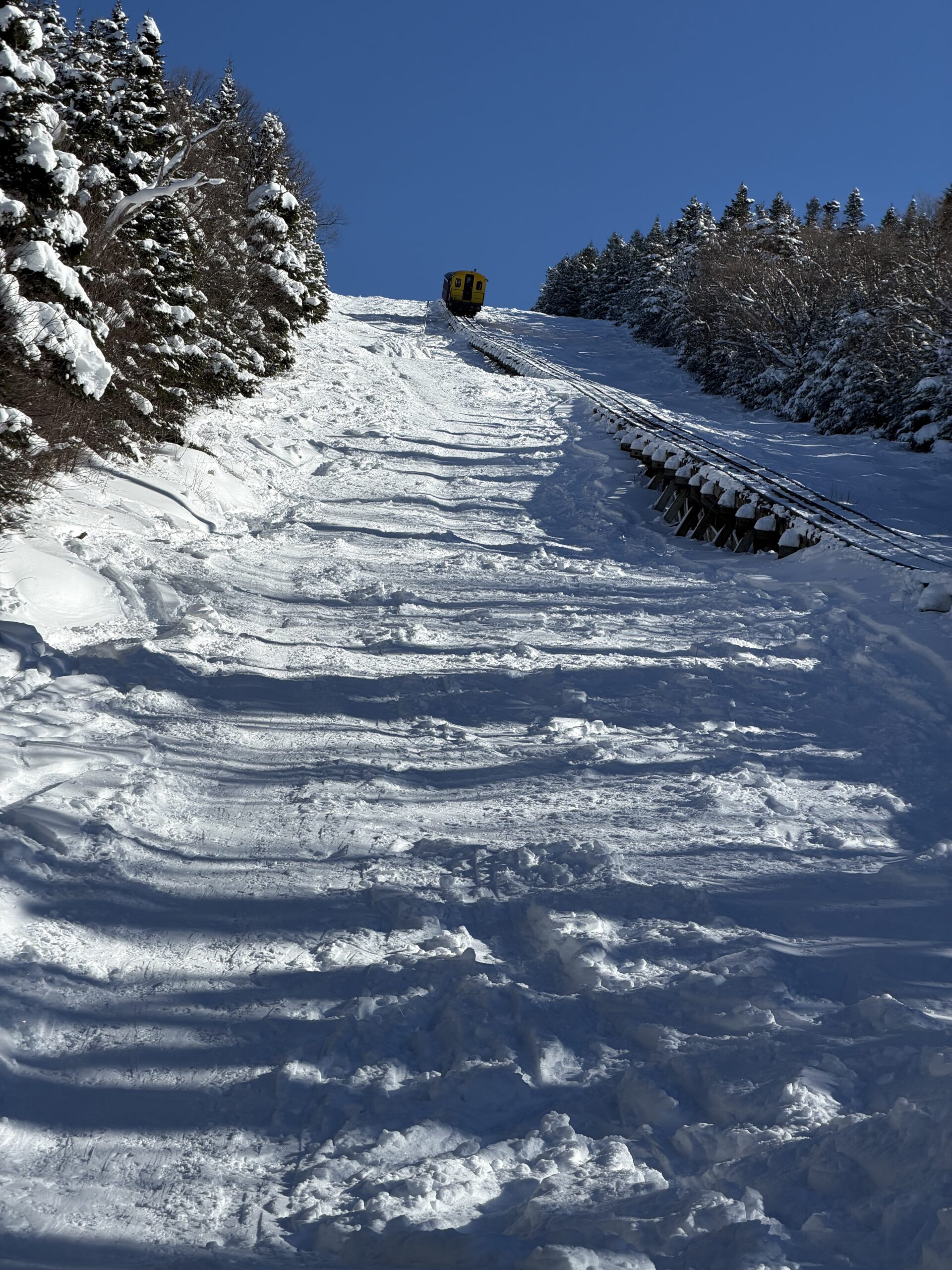
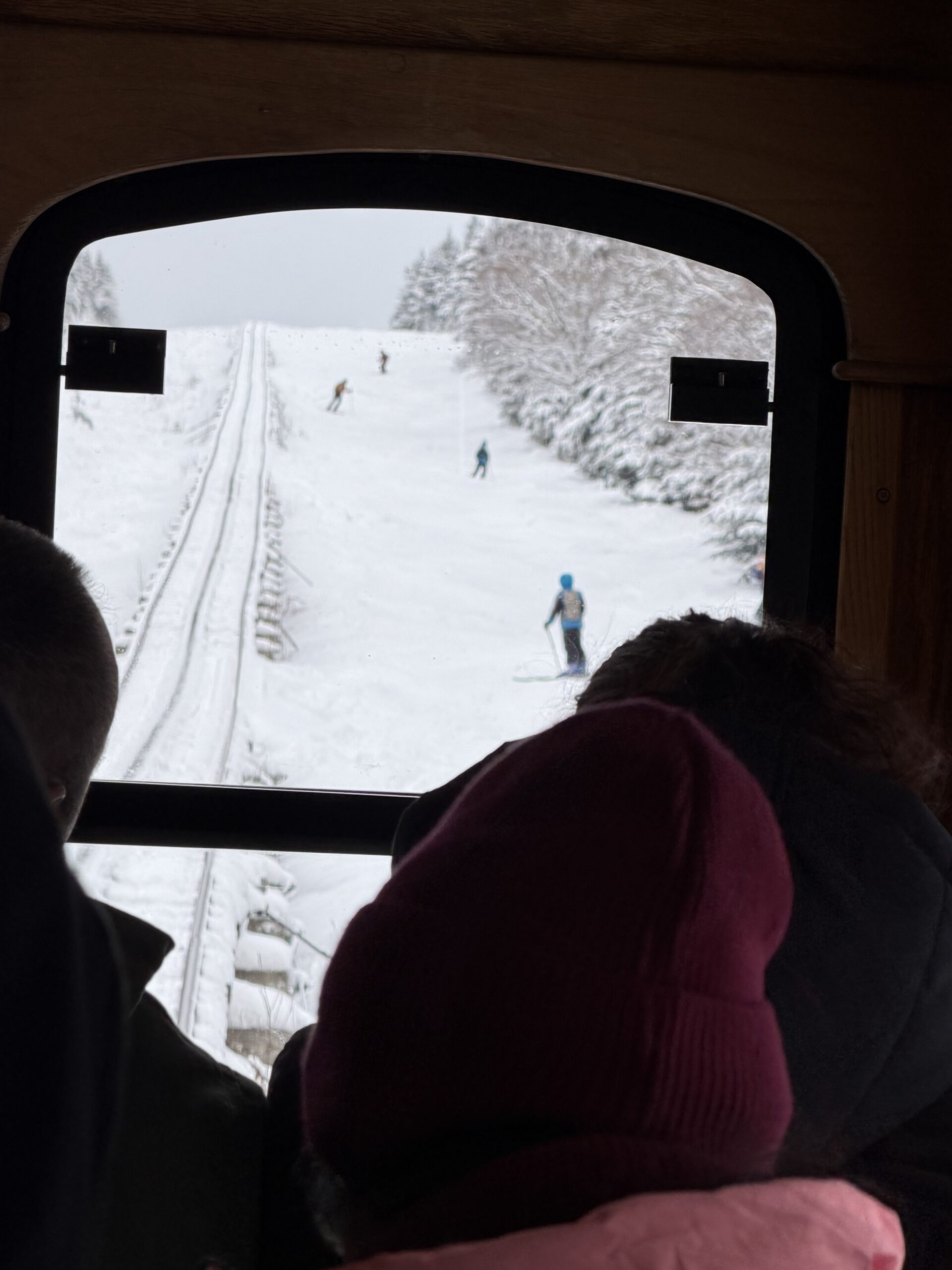
The least taxing is to ride a Cog Train to Waumbek Station, the highest the company operates the train in the winter. Waumbek sits at elevation 4,000 ft., 1,300 feet above the Marshfield Station base. On weekends, the rail company runs six trips per day starting at 9:00 am and leaving every 75 minutes. On weedays they run four trips starting at 10:15 am. Waumbek is a luxury destination in the world of backcountry terrain with “elevated observation decks, warming huts, a blazing firepit, and complimentary hot refreshments.” On the rare clear winter day you can see from the southern Presidentials to northern Vermont. There are two routes down, left side of the tracks and right side. Both are 45 feet wide, almost precisely. Unlike most backcountry skiing there is no concern about forest debris – fallen trees and branches, stumps or boulders – lurking under thin snow cover. The rail company keeps the terrain clean of major hazards (except the rail and ties…). It’s a straight shot down with pitch varying between 20 and 36 degrees for inspiring intermediate skiing in the “wilderness” except for the company of a whistle tooting, 19th century marvel chasing you up and down the trail.
For those interested in earning these turns, skinners pack out a track generally up the left edge.
Waumbek Station. Top of the ride during the winter months at about elevation 4,000 ft.
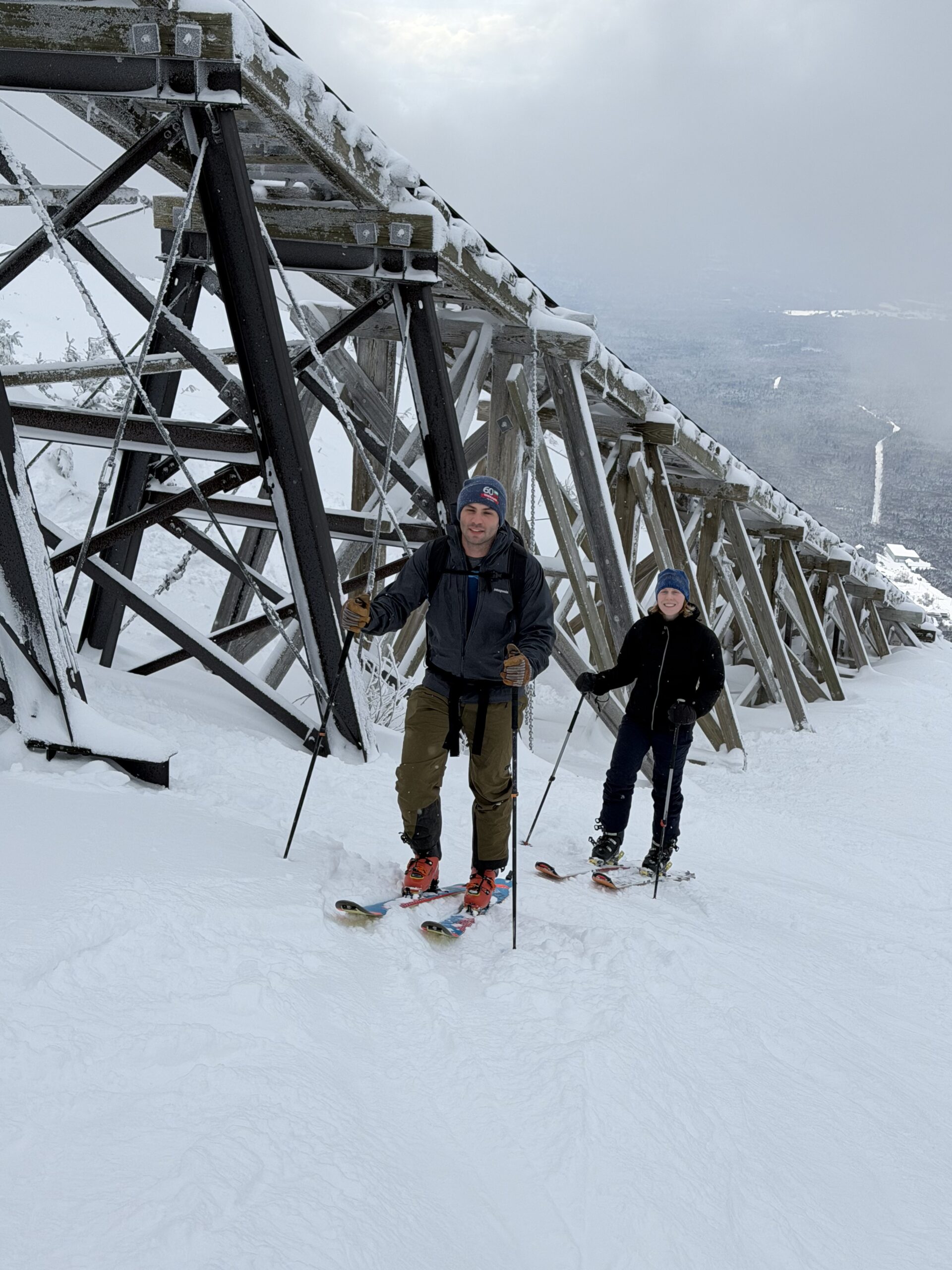
Of course, if you are skinning (or boot packing for those really working), you can continue your ascent above Waumbek. A maintenance shed just above Waumbek marks the transition to a narrower and more consistently steeper path. The stretch from the maintenance station up to Jacobs Ladder is up to 38 degrees per the Cog website. Between the pitch and the narrowness, the skiing is more challenging, perhaps an advanced Blue or a Black diamond in ski metrics. It can ski pretty fast. The biggest hazard, aside from skittering over the down side edge may be uphill skinning traffic. But the terrain is clean and comfortable.
Jacob’s Ladder is perhaps the most “the most impressive feat of engineering on the entire railway… At nearly 300’ long, 25’ above the surface of the mountain, and ascending at a 37.41% grade, it is the steepest and second-highest railroad trestle in the world, and by far the steepest portion of the Mt Washington cog line.”
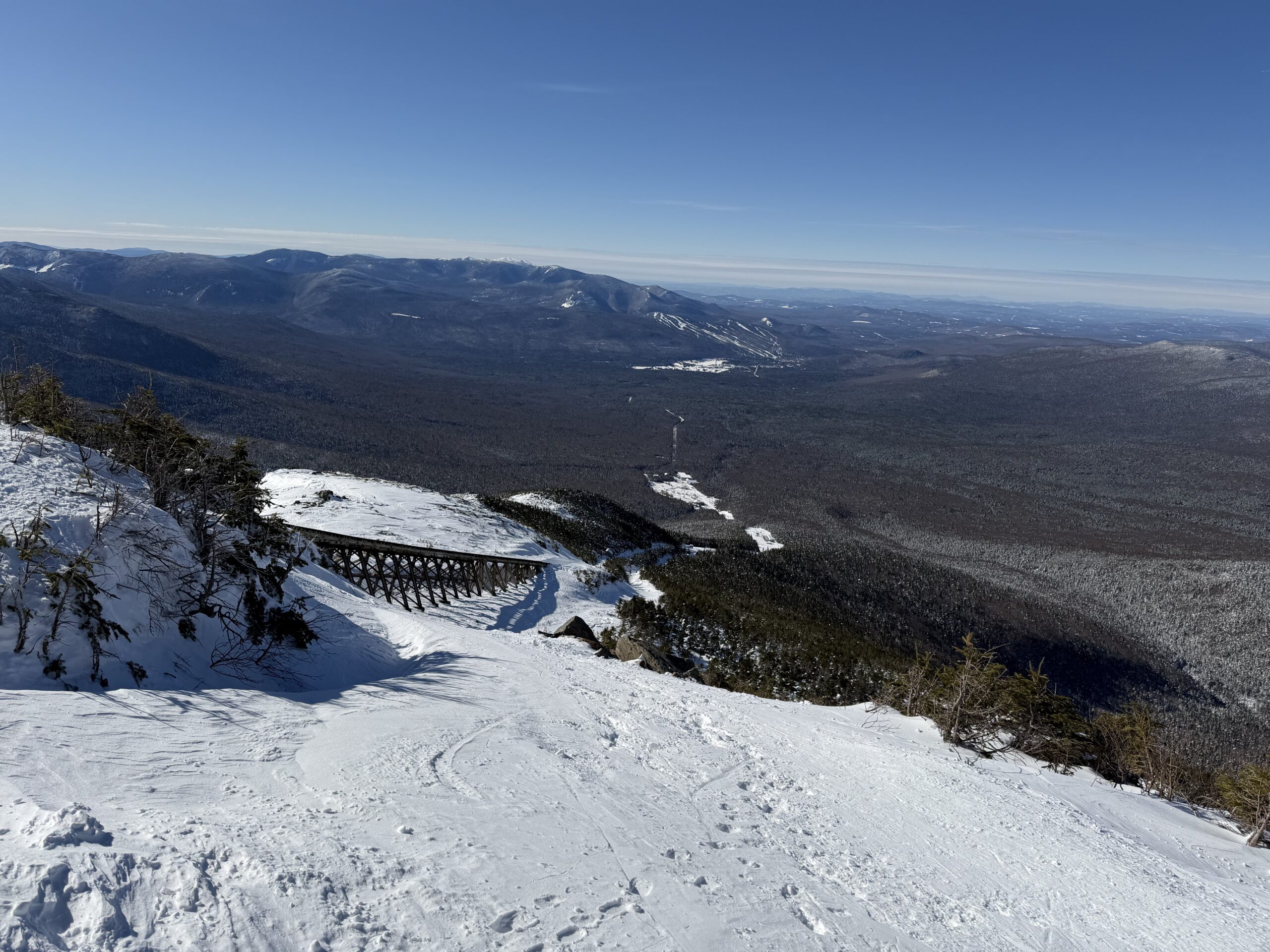
Jacob’s Ladder also marks the transition to alpine terrain, a good excuse to cease torturing weary glutes and quads. At 2,100 feet above Marshfield, it is also a significant 1.5 mile descent. More practically, conditions above this point are far more variable, scoured by winds without the protection of trees and more subject to the famous Mt. Washington summit gales exceeding hurricane force over 100 days per year, predominantly during the winter months. The prevailing direction being from the west typically scrapes the west face of the top of Mt. Washington much to the benefit of the famous ravines on the East side, Huntington, Tuckerman and Gulf of Slides, part of why they have such fantastic late season skiing well into Spring. But the top of the Cog can have great snow after a Nor’easter or a rare persistent easterly wind. Like for many backcountry skiers paying attention to the weather patterns leading up to your ski day can inform you of expectations for your adventure.
Jacob’s Ladder sits at the transition to the alpine zone, about 4,700 feet, a popular top for many skinners.
About 3/4 of a mile beyond Jacob’s Ladder are two further options for experienced backcountry skiers. Near the “skyline switch” the Westside Traverse hiking trail intersects the Cog track. To lookers right is the vast Ammonoosuc Ravine, heading left takes you into the more compact Burt Ravine. For more extensive coverage of skiing in Ammonoosuc and Burt, read David Goodman’s precise assessments in his backcountry ski guide, Best Backcountry Skiing in the Northeast, an AMC publication. These are true backcountry experiences. Always best to go with a buddy, preferably a guide or someone who has adventured in these drainages before if it is your first excursion and perhaps even if it isn’t. These areas are also avalanche terrain best skied in the spring. As always, check the Mt. Washington Avalanche Center forecast for conditions.
Naturally, in today’s world gnarly dudes have posted plenty of Go Pro videos of skiing The Cog. A Connor O’Brien posted this video with similar route and conditions to my recent descent, minus the tunes. As indicated, he clicks in at about 5,000 ft, quite a bit short of the summit. Enjoy.
Marshfield Base Station for the Mt. Washington Cog Railway is 6 miles off Rte. 302 at the end of Base Station Rd. For those skinning or hiking the route, parking is located in the Hiker’s Lot, and the rail company charges a “general access” fee of $10 per person per day payable at the kiosk at the entrance to the lot. For those taking a ride tickets are available online or in the base building.
Enjoy the many options for “skiing The Cog Railway”.
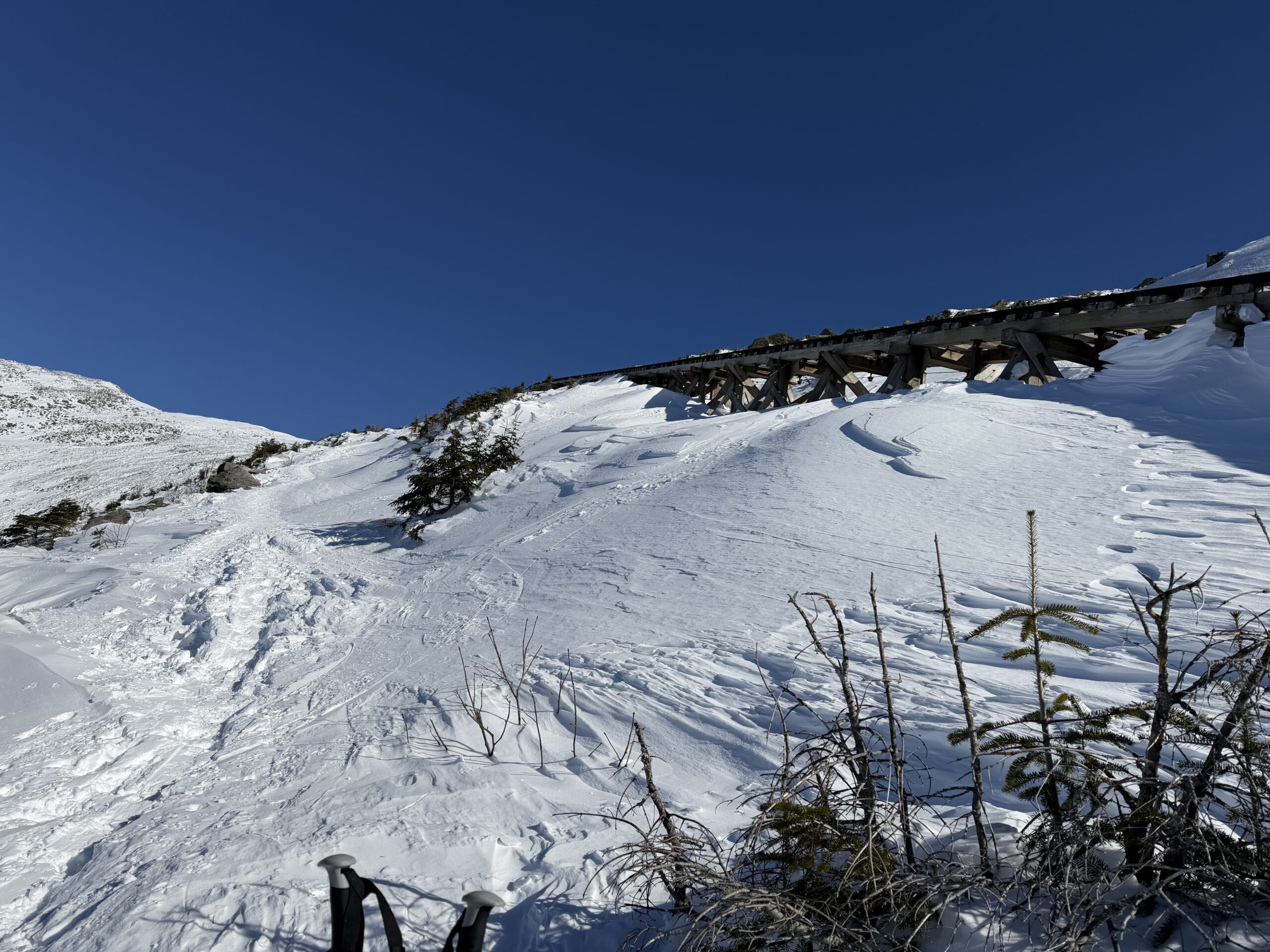
And into the alpine…