Tips For Exercising In New Hampshire’s Cold Weather – by Ham Mehlman
November 26, 2025
Posted in

Ham Mehlman is Editor-in-Chief of Mountain Passages and an AMC-NH member. He skis, hikes and bikes New Hampshire’s backcountry, trails and byways when time allows. He sports no specific professional authority to advise on cold weather exercise but does a have a bit of a medical background, sufficient to parse the literature and multitude of recommendations.
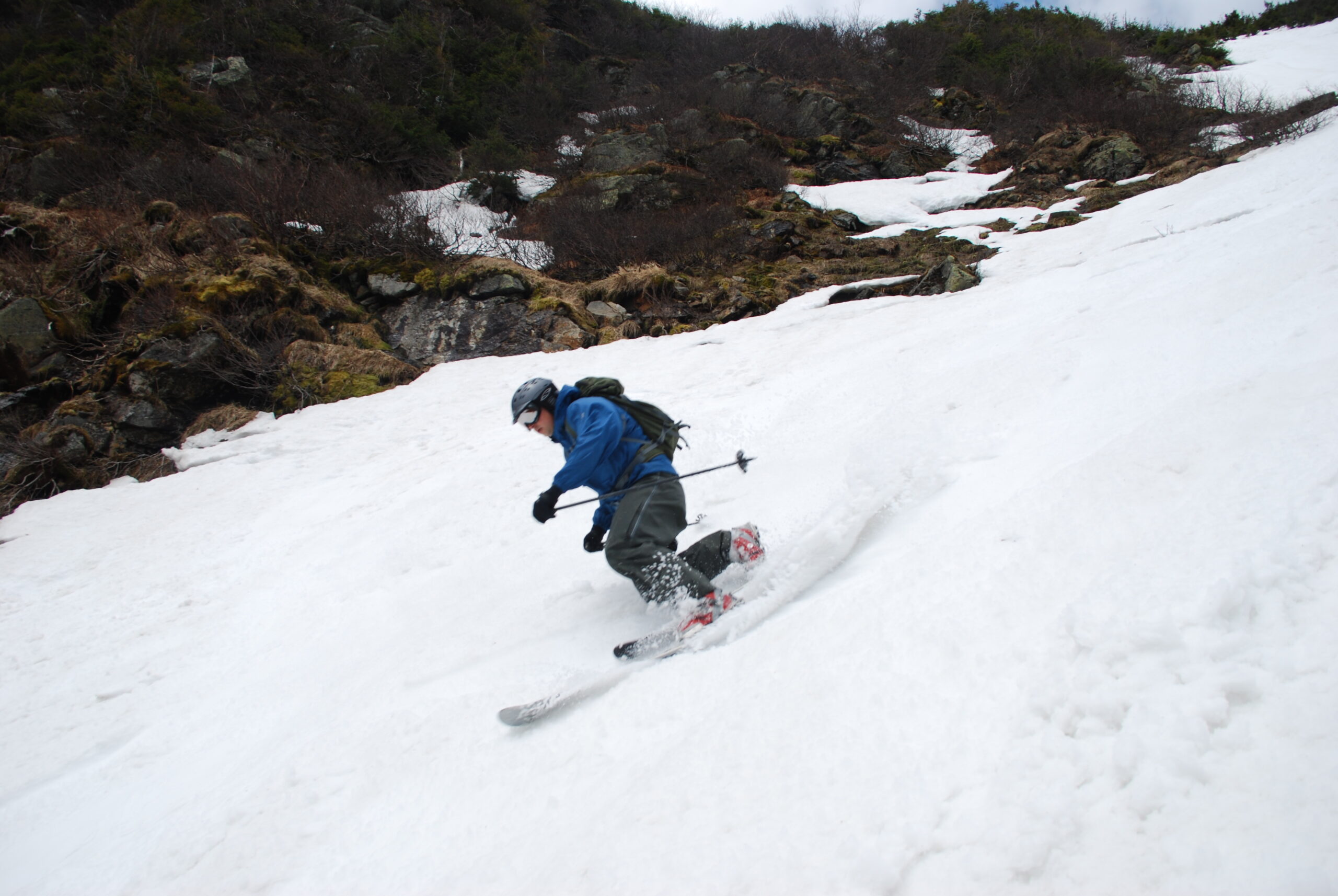
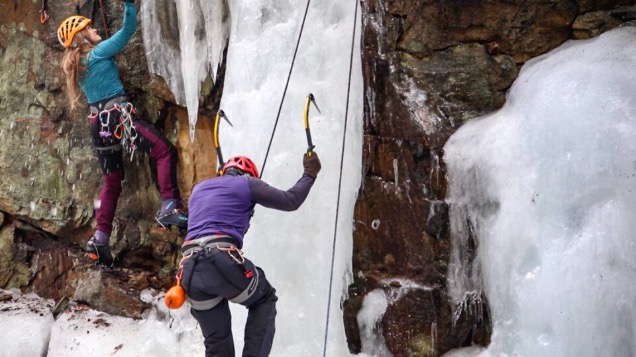
Around these parts we are “all-season” machines using our muscles indoors and outdoors regardless of temperature. With colder temps we may change our activities to skating, skiing in many flavors or ice climbing. We stretch microspikes over the sole of our boots or strap on the snowshoes to clamber up and down every ice encrusted bump and mound around. And we are not shoveling the white stuff from inside a heated cabin, or constructing buildings or loading a ski lift in balmy conditions. No, it’s cold here in the winter. In short, there is no stopping us getting out there and working our quads and biceps regardless of temperature.
Medical types do warn that muscles, tendons and ligaments can be a bit cranky when they are cold. How cranky depends on a lot of factors. So dictating dos and don’ts before and during exercising in the cold might be met with a yawn and typical New Hampshire indifference. But, curious if I could avoid a few aches and recurring pulls of my own, I reviewed various treatises on exercising in cold weather. Some references seemed authoritative enough, cold weather sports medicine “experts” and NIH research papers etc. Other references just sounded practical. Before getting into the weeds I’ll simply bullet the most important concepts I came across. The best I could do for a mnemonic to remember the essentials is S H E L T E R.
- S TRETCH to warm muscles before heading out and after resting
- H YDRATE before, during and after
- E AT
- L AYER clothing to manage body temperature
- T RAIN in cold
- E NJOY
- R ECOVER

Why STRETCH to warm muscles before heading out or resuming activities after rest?
Cold weather affects muscles in many ways:
- Reduced flexibility: When muscles get cold, they contract and become less pliable, similar to how cold rubber becomes less flexible and more likely to snap.
- Decreased blood flow: The body prioritizes keeping the core warm, which leads to reduced blood flow to the muscles. This lack of blood flow makes them stiffer and less able to handle physical activity.
- Impaired reaction time: Colder temperatures can slow nerve conduction and reaction times, increasing the risk of slips, falls, and other injuries during activity.
- Higher risk of strain: Because muscles are tighter, they can be pushed beyond their normal range of motion more easily, which can lead to a muscle pull or tear.
- Increased energy needed for damage: Some research indicates that less energy is required to cause a muscle tear when the muscle is below its normal physiological temperature.
Coaches, physical therapists, mom and dads, have counseled a bit of “warmup” stretching before most recreational activities. And many construction companies, for example, begin their day with a few calisthenics, particularly in some other cultures. But the need to warm or “activate” muscles and connecting tissues may be less appreciated. Humans are isothermal creatures. Our systems, including muscles, work best at normal body temperatures. Researchers have observed declines in muscle performance after just a 4-degree decline in tissue temperature to 95 F. And perhaps the main benefit of an active stretch is to warm up the muscle as it begins working.
One Orthopedic doctor advises focusing on four joints most at-risk in cold conditions:
- Knees: As the muscles and tissues surrounding the knee become stiffer and less lubricated in cold conditions, the knee ligaments become more vulnerable to tears and strains. For instance, anterior cruciate ligament tears are among the most common skiing injuries because the knee ligaments are already susceptible to injury in the cold.
- Shoulders: An improperly warmed-up shoulder joint won’t have the necessary range of motion to perform well without tearing or straining the surrounding muscles, tendons and ligaments. Shoulder injuries like a rotator cuff tear are far more likely to happen when the tendons around the shoulder socket are not warm enough to easily move the arm.
- Hips: As your largest weight-bearing joint, the hip needs a thorough warmup to function smoothly without damaging ligaments or pulling on the leg muscles. Excessive tightness or stiffness from the cold can lead to a major hip injury, such as a labral tear.
- Elbows: As a smaller joint, the elbow is especially susceptible to strains and other injuries. Stiff elbows will not have the flexibility necessary to prevent overextension and stress on the supporting tendons and ligaments.
Why HYDRATE? Again, we pretty much all know from experience, education and the plethora of ads for sport drinks, about the need to hydrate during exercise. The same general principles apply to exercise in all environments but with some interesting aspects to be aware of in the cold. The simple message here is not to rely on innate “thirst” signaling to tell you when to drink if you are in a cold environment. By at least one study, our innate urge to drink, or “thirst”, is up to 40 percent less sensitive when the body is cold. And this might be on top of normal loss of sensitivity with aging. Exactly why you lose thirst is not clear, but the same study speculates that our reflex to constrict peripheral blood vessels to preserve core body temperature reduces a secretion of a fluid-regulating hormone called arginine vasopressin, or AVP, which leads to a decline in thirst. Nor are we as much aware of how much water we are losing through sweat since much of the water loss is through respiration or absorbed by layers of clothing. Cold air is often very dry. The lungs essentially warm and humidify your breath for optimal airway and absorption conditions. “That warm mist you see when exhaling? That’s water leaving your system.” In summary, in cold weather “You Sweat More Than You Think.”
Recommendations of how much and how frequently to hydrate are all over the map and of course depend on factors including body size and workout intensity. But one consistent message is to drink before, during and after exercise.
Water, itself being non-caloric, does not directly create or provide energy for muscles. But it is essential for supporting the energy production process and life. Please refer to the Appendix box at bottom of article for more detail on the many functions water provides for our bodies.
75%-80% of muscle by weight is water, depending on the information source. Keep them pumped up.
Why LAYER? – By almost universal consensus, the best strategy to If to achieve and maintain an optimum operating temperature to enable muscles and tendons to do their job is to layer our clothing. Yes, promoting layering is a goldmine for apparel companies which reel us into spending on “base, “thermal”, “outerwear” and many other categories specific to the activities. Sometimes they intentionally obfuscate and confuse with debates over the merits of various materials such as, cotton versus. a slew of technical materials touting sweat wicking, breathability etc. But the strategy is reasonable allowing the addition and subtraction of various weight garments to based match conditions, activity and body.
Why TRAIN in cold air? Training is integral to most athletic or rigorous endeavors regardless of ambient conditions. However there is some evidence that, with time, our bodies adapt to exertion in cold environment, sometimes in ways beneficial to exercise in all environments. Research suggests that cold environments can improve athletes’ endurance and recovery capabilities, reducing muscle damage and fatigue associated with strenuous exercise (Liu et al., 2022). Cold acclimation has also been observed to optimize cardiovascular responses, including heart rate and blood pressure regulation, which are critical for high-intensity exercise performance (Wu et al., 2021). Another finding demonstrated that moderate cold exposure induces a range of physiological adaptations that can enhance athletic performance. For instance, cold exposure stimulates mitochondrial biogenesis within muscle tissue, resulting in enhanced energy metabolism efficiency and improved overall performance. But our responses to cold may not just be physical. Just getting used to the sudden chill is thought to mute our otherwise panicked response to sudden cold exposure. Bottom line – get used to the cold.
ENJOY – No “why” or explanation needed!
Why RECOVER? – After a workout, your muscles experience small tears that need to heal. This process, called muscle protein synthesis, helps rebuild the muscle fibers stronger than before. However, recovery isn’t just about repairing muscles—it also involves removing metabolic waste, like lactic acid, and replenishing the nutrients lost during exercise.
While nutrition, rest, and workout intensity all influence recovery, hydration is the unsung hero. Proper water intake supports almost every aspect of the recovery process, from nutrient transport to waste removal. Conversely, dehydration can severely impair muscle recovery. It makes it harder for your muscles to repair and can cause fatigue, cramps, and slower recovery times.
When exercising in New Hamshire chill remember to S H E L T E R
- S TRETCH to warm muscles before heading out and after resting
- H YDRATE before, during and after
- E AT
- L AYER clothing to manage body temperature
- T RAIN in cold
- E NJOY
- R ECOVER
Five Essentials Functions for Water in Our Bodies
Per a 2019 article in the journal Nutrients, water has the following five main functions in the human body:
- “ A metabolic function. Water is the medium in which all biochemical metabolism reactions occur. Water acts as a solvent and as a reactive in different metabolic reactions, mediates the recognition of molecules, acts as a communication channel between the inside and outside of proteins and increases the mobility or flexibility of enzymes, facilitating the enzymatic attack necessary for reactions to occur. Thus, for example, the fact that each gram of muscle glycogen is stored with 2.7 g of water allows glycogen to be easily attacked by hydrolytic enzymes that quickly release glucose, the fuel for exercising muscles. Apart from facilitating the enzymatic function, water also allows nervous transmission of electric current.
- “A transport function. Circulating blood is the transport system that enables substances (nutrients, hormones, oxygen, metabolites, etc.) to be exchanged between different organs and systems in body, while blood filtration by the kidneys eliminates the waste products of metabolism through the urine.
- “A temperature control function. Water maintains a constant body temperature regardless of the ambient temperature and metabolic activity for several reasons: it has a high capacity to store energy in hydrogen bonds in such a way as to cushion temperature changes, it has high thermal conductivity which ensures rapid distribution and transfer of heat to the skin, and it requires a great deal of energy to be evaporated. By absorbing heat, distributing it among the liquid compartments of the body, and removing it through the skin through the evaporation of sweat, water keeps the body temperature within a very narrow range.
- “A structural function. Water bound to cytoplasmic proteins determines cell volume, which, in turn, influences physiological mechanisms such as cellular performance and the regulation of cell proliferation or apoptotic cell death. Water also determines plasma volume and perfusion of tissues.
- “A mechanical function. Water acts as a lubricant in the mouth (through saliva), eyes (through tears) and joints (through synovial fluid), protects and promotes mucous membrane cleansing, and prevents injuries and fractures by adding flexibility and elasticity to tissues.”
Please send comments to comments@amc-nh.org
selected references: This article attempts to be comprehensive but is by no means exhaustive on this huge topic. The author draws liberally from Google web and AI searches. The below are a few information sources and, in some cases, references for additional information:
- Xu et al., Integrated effects of cold acclimation: physiological echanisms, psychological adaptations, and potential applications, Frontiers in Physiology, 6.2.2025
- Gombera, Mufaddal, MD, How Cold Weather Affects Sports Injuries?, 11.5.2020
- Froedtert & Medical College of Wisconsin, How Cold Weather Affects the Body During Exercise, 1.3.23
- Jordan, Jenn, What Really Happens to Your Body On The Slopes? How Skiers Can Train For The Cold, Weather.Com, 11.23.2025
- Lorenzo, Isabel, The Role of Water Homeostasis in Muscle Function and Frailty: A Review, Nutrients, 8.9.2019